Number of Issues

48

Article View

579281

PDF Download

389,628

View Per Article

1604.66

PDF Download Per Article

1079.3

Number of Submissions

795

Rejected Submissions

330

Reject Rate

42

Accepted Submissions

357

Acceptance Rate

45

Time to Accept (Days)

131

Number of Indexing Databases

13

Number of Reviewers

545

Knowledge Retrieval and Semantic Systems is an open-access, double-blind, peer-reviewed journal published by Allameh Tabataba’i University, the leading university in Humanities and Social Sciences in Iran. This Journal has been established to provide an intellectual platform for national and international researchers working Knowledge Retrieval and Semantic Systems. The Journal was founded in as a response to quick advancements in Knowledge Retrieval and Semantic Systems and was dedicated to the publication of highest-quality research studies that report findings on issues of great concern to the profession of Knowledge Retrieval and Semantic Systems.

To allow for easy and worldwide access to the most updated research findings, the journal is set to be an open-access journal. Yet, To allow for easy and worldwide access to the most updated research findings, the journal is set to be an open-access journal. Yet, The journal charges two million Rials to compensate a part of the arbitration fee, and if the article is accepted, additionally four million Rials will be charged from the authors for a part of the costs of processing the articles, the rest of the costs will be financially supported by Allameh Tabatabai University.

Non-Iranian authors are free of mentioned charges.


The journal is published in both a print version and an online version.

Research Paper Information Storage and Retrieval

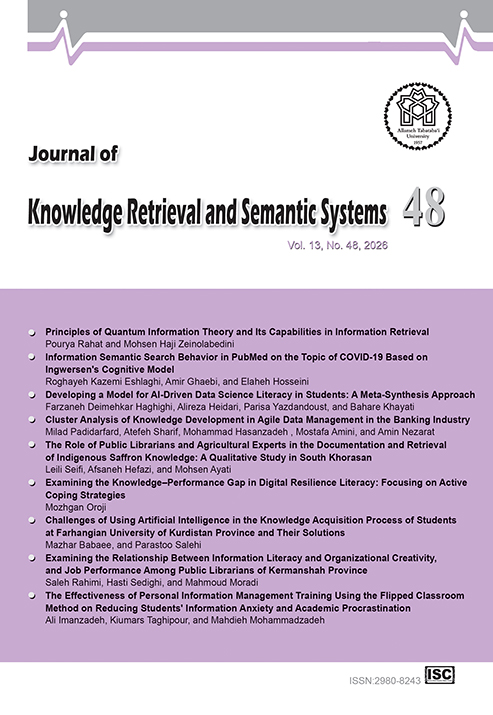
Principles of Quantum Information Theory and Its Capabilities in Information Retrieval

Pages 1-32

https://doi.org/10.22054/jks.2025.86403.1723

Pourya Rahat, Mohsen Haji Zeinolabedini

Abstract Introduction Quantum information is a general form of information that can be considered the fundamental material of the universe (Penchev, 2020). Its basic unit is the qubit, which, unlike a classical bit's binary 0 or 1 state, can exist in multiple states simultaneously. This phenomenon, known as superposition, allows a qubit to be a linear combination of states (Nielsen & Chuang, 2010), enabling quantum parallelism and an exponential increase in computational power. Quantum Information Theory (QIT) explores these principles, along with other key concepts such as entanglement, where qubits become interdependent regardless of distance; the no-cloning theorem, which makes it impossible to create an identical copy of an unknown quantum state; and practical applications like quantum error correction and quantum cryptography. While traditional Information Retrieval (IR) is built on core concepts like Boolean, vector space, and probabilistic models (Melucci, 2015; Tunkelang & Thelwall, 2009; Büttcher et al., 2010; Gudivada et al., 2018), QIT provides a new framework to enhance it. This theory offers a way to unify the representation, ranking, and cognitive aspects of the user by applying the formalism and mathematics of quantum mechanics. This connection is often inspired by the theory and applied to classical computers, drawing on the broad use of quantum principles in cognitive science, psychology, and decision-making (Ashoori & Rudolph, 2018; Lebedev & Khrennikov, 2020). This paper aimed to review the fundamental principles of QIT, analyze their relevance to IR, and present the opportunities and challenges at the intersection of these two fields. Literature Review The intersection of QIT and IR has evolved from foundational theoretical work to practical and evaluative models. Early research by Piwowarski et al. (2010) proposed a quantum framework to address key IR challenges like interaction, novelty, and diversity, a view expanded by van Rijsbergen (2011), who argued that quantum formalism is the appropriate language for modeling the uncertainty inherent in information. Subsequent studies demonstrated the application of quantum mathematics, such as the "Quantum Probability Ranking Principle" for ranking interdependent documents (Zuccon & Azzopardi, 2010) and the use of quantum theory for "quantum-like" modeling (Khrennikov, 2019) and meaning-focused retrieval (Aerts et al., 2013). More recently, the field has moved toward integrating quantum principles with deep learning, as seen in quantum-inspired neural matching models (Jiang et al., 2020), and addressing security through protocols like quantum private information retrieval (Yang et al., 2023). This progression indicates a shift from purely theoretical explorations (Ashoori & Rudolph, 2018) to the development of practical evaluation frameworks (Ferrari Dacrema et al., 2024) and new contextual search methods (Alodjants et al., 2024). Methodology This study was conducted as fundamental research, employing an analytical-review method appropriate for the theoretical and emerging nature of the topic. Data collection started with documentary research, using defined keywords to systematically gather sources from databases such as Web of Science and Google Scholar. Following the screening and selection of relevant literature, the research utilized an approach of conceptual analysis and literature synthesis. Foundational concepts from Quantum Information Theory were first extracted and broken down. Then, in the synthesis phase, these concepts were systematically linked to the challenges, needs, and processes of Information Retrieval to build a logical and applied bridge between the two fields. Results The results of this analysis are presented in two main parts. First, the foundational concepts of Quantum Information Theory (QIT) are detailed, organized into three categories: fundamental concepts, including qubits, quantum states, superposition, entanglement, and quantum entropy; principles and theories, such as quantum algorithms and the no-cloning theorem; and applications, like quantum error correction, cryptography, and quantum gates. The second part of the results systematically connects these principles to the domain of Information Retrieval (IR). The results demonstrated how concepts like superposition can offer a probabilistic framework for relevance, how quantum algorithms, such as Grover's algorithm, can exponentially speed up search, and how quantum entanglement and error correction can be used to model complex term dependencies and ensure the security and integrity of the retrieval process, respectively. Discussion The theoretical alignment between Quantum Information Theory (QIT) and Information Retrieval (IR) suggests that quantum principles are exceptionally well-suited to address the core limitations of classical IR systems, particularly the complex issues of context, ambiguity, and human cognition. The inherent probabilistic nature of quantum states, governed by superposition, offers a formal mathematical framework for modeling the fuzzy and subjective concept of relevance more dynamically than traditional vector-space models. Furthermore, the concept of entanglement provides a powerful mechanism to model the nonlocal dependencies between index terms, documents, and user intent, moving beyond simple co-occurrence counts to capture holistic conceptual relationships. The analysis highlighted that while the full power of quantum computing is not always necessary for these benefits, as evidenced by successful quantum-like (QL) models running on classical hardware, the ultimate, exponential performance gains promised by algorithms like Grover's algorithm for database searching remain the strongest long-term motivation for future IR systems to leverage true quantum hardware. Conclusion By analytically comparing the core principles of Quantum Information Theory (QIT) and identifying their points of convergence with classical information retrieval systems, this research confirmed that Quantum Information Theory offered a potent, mathematically grounded framework with the potential to fundamentally transform the field of Information Retrieval. By leveraging quantum principles (such as superposition to model the inherent uncertainty of relevance and entanglement to capture complex, nonlocal dependencies between terms) future IR systems could overcome the cognitive and structural limitations of classical models. While the full deployment of quantum algorithms like Grover's algorithm on dedicated quantum hardware promised exponential speed and efficiency gains in the long term, even the adoption of QL models on existing classical infrastructure could yield significant, immediate improvements in accuracy, security, and contextual awareness. Despite existing technical and theoretical obstacles, it was anticipated that continued research in this area would lead to innovative technologies based on quantum principles, resulting in enhanced precision and efficiency in future information retrieval systems.
Research Paper Semantic Systems

Information Semantic Search Behavior in PubMed on the Topic of COVID-19 Based on Ingwersen's Cognitive Model

Pages 33-73

https://doi.org/10.22054/jks.2026.92645.1772

Roghayeh KAzemi Ashlaghi, Amir Ghaebi, Elaheh Hosseini

Abstract Introduction
Semantic search behavior refers to a set of cognitive and practical processes and actions undertaken by users during information searching, in which the individual goes beyond mere word matching to understand and retrieve information based on meaning, concept, and conceptual relationships among terms. The purpose of this study was to analyze the semantic information search behavior of faculty members at Shahid Modarres Hospital in PubMed regarding COVID-19, based on Ingwersen's model.
Research Questions
1. How does the semantic search behavior for COVID-19 information in PubMed by faculty members of Shahid Modarres Hospital occur based on the 'information retrieval systems' component in Ingwersen's cognitive model?
2. How does the semantic search behavior for COVID-19 information in PubMed by faculty members of Shahid Modarres Hospital occur based on the 'identification of information content' component in Ingwersen's cognitive model?
3. How does the semantic search behavior for COVID-19 information in PubMed by faculty members of Shahid Modarres Hospital occur based on the 'user interface' component in Ingwersen's cognitive model?
4. How does the semantic search behavior for COVID-19 information in PubMed by faculty members of Shahid Modarres Hospital occur based on the 'cognitive space' component in Ingwersen's cognitive model?
5. How does the semantic search behavior for COVID-19 information in PubMed by faculty members of Shahid Modarres Hospital occur based on the 'social/organizational environment' component in Ingwersen's cognitive model?
Literature Review
Previous studies indicate that information search behavior and semantic search are influenced by individual, systemic, and contextual factors. Shohrati (2022) reported that physicians and nurses made the most use of the PubMed database for searching COVID-19-related information, and their primary objectives included understanding the virus, fulfilling information needs, and sharing information. Khoshian et al. (2024) showed that although semantic search has moderate performance in conceptual connectivity and retrieval of multi-word concepts, it contributes to improving information retrieval. Khosravi et al. (2015) found no significant difference between PubMed's suggested keywords and MeSH terms in terms of result relevance, although both contribute to the development of search vocabulary. Lazarus et al. (2020) demonstrated that combined strategies based on free text and MeSH yield the highest sensitivity in retrieving COVID-19 articles. Furthermore, studies by Das and Saha (2019), Nemeshaev et al. (2021), and Shiri & Revie (2006) have emphasized the role of semantic search, ontology, and user experience in enhancing retrieval accuracy and improving query expansion.


Methodology
The present study is applied in terms of purpose and was conducted with a quantitative approach using a descriptive-analytical survey method. The research population consisted of 64 faculty members of Shahid Modarres Hospital. Due to the limited size of the population, no sampling was performed, and 54 questionnaires were collected (response rate of 84%). The data collection instrument was a researcher-developed questionnaire designed based on Ingwersen's cognitive model and the semantic search capabilities of PubMed. The content validity of the instrument was reviewed and confirmed by experts in information retrieval, semantic search, and clinical librarianship, and its reliability was obtained with a Cronbach's alpha coefficient of 0.80. Data were collected both in-person and online and were analyzed using SPSS software version 25.
Results
Faculty members actively use PubMed's semantic search features, including simple search, auto-suggestions, term refinement, combined strategies, MeSH (especially Major Topics), synonyms, and suggested keywords. While they are generally satisfied with PubMed's layout, use of frameworks like PICO and advanced indexing tools (e.g., Show Index List) is limited. Abstracts are the primary tool for assessing relevance, while personalized features like My NCBI are underutilized. Users rely on full texts for conceptual understanding, with less use of citation tools. Boolean operators and user-friendliness are rated favorably. Search behavior is influenced by scientific, research, and clinical needs, prior experience, database awareness, and the need for authoritative information. PubMed helps reduce uncertainty and supports decision-making. Organizational factors such as infrastructure, library services, and professional priorities also shape search behavior. Significant differences in semantic search behavior were found based on academic rank, years of service, and expertise, but not by gender.
Discussion
The research findings indicate that faculty members largely utilize PubMed's semantic capacities for search development. This result is consistent with the study by Khoshian et al. (2024), which confirmed the role of semantic search in accessing more relevant scientific information. Additionally, the use of MeSH and PubMed's suggested keywords aligns with the findings of Khosravi et al. (2015), who considered these tools effective in expanding users' vocabulary range.
Despite the appropriate use of some semantic capabilities, the results showed that more advanced tools such as MeSH Subheadings, Show Index List, and the PICO framework have not yet been fully institutionalized in users' search behavior. This finding is consistent with the results of studies by Eriksen & Frandsen (2018) and Fineout-Overholt et al. (2024) regarding the limited use of structured search frameworks by users. The limited use of personalized features such as My NCBI indicates that a portion of this database's individual knowledge management capacities has not yet been fully utilized.
According to Ingwersen's cognitive model, the results confirm that semantic search behavior is not merely a function of system features, but rather the interaction among users' cognitive characteristics, professional goals, and organizational environment also plays a role in its formation. Search experience, information needs, and users' scientific and clinical objectives determine the path of selecting search strategies.


Conclusion
The results of this study showed that the semantic search behavior of faculty members in PubMed is the result of the interaction among system capabilities, users' cognitive factors, and socio-organizational conditions. Although users make good use of basic features and some of PubMed's semantic tools, there is a need for further training in utilizing advanced tools such as MeSH Subheadings, PICO, indexing features, and personalized capabilities. Accordingly, designing targeted educational programs to enhance semantic search skills, developing visual guides for the use of search frameworks, and strengthening the role of clinical librarians can lead to improved information retrieval quality and more effective support for scientific and clinical decision-making.

Research Paper Information and Knowledge Management

Developing a Model for AI-Driven Data Science Literacy in Students: A Meta-Synthesis Approach

Pages 75-103

https://doi.org/10.22054/jks.2026.89092.1747

Farzane Deimehkar Haghighi, alireza heidari, parisa yazdandoust, bahareh khayatti

Abstract Introduction The rapid convergence of data expansion and artificial intelligence (AI) is transforming scientific discovery and daily decision-making. However, focusing solely on technical specialization risks dividing society into a minority of tech creators and a passive majority of consumers. To ensure active, critical, and responsible participation, it is essential to distinguish between data science (a specialized technical field) and data literacy (a fundamental competency for all citizens). With the rise of generative AI, data literacy serves as a prerequisite for evaluating AI tools, while AI itself acts as a medium to deepen data literacy (e.g., through interactive tools like GenAI Teachable Machine). Although schools are the primary institutional setting for fostering data literacy from an early age, a significant gap exists between strategic intent and classroom execution. This gap is driven by structural barriers, pedagogical challenges, practical issues, and emerging ethical concerns. Addressing these theoretical and practical challenges requires moving beyond fragmented approaches toward an integrated framework that balances learning with AI as a tool and learning about AI as content. Research Questions 1. What are the antecedents of developing AI-driven data science literacy in students? 2. What are the processes involved in developing AI-driven data science literacy in students? 3. What are the outcomes associated with primary school students' data science literacy? 4. What is the relationship among the antecedents, processes, and outcomes of developing AI-driven data science literacy in students? Literature Review The body of literature regarding data literacy education spans four major streams, each highlighting key dimensions while leaving structural gaps in the overall framework. Research on student-centered approaches and pedagogy emphasizes early intervention using active learning frameworks, such as project-based learning and authentic datasets (Friedrich et al., 2024; Huang et al., 2023; Schreiter et al., 2024; Witte et al., 2024); however, these studies primarily address the "what" and "how" of instruction while neglecting the specific competencies required of educators. Regarding teacher competencies and professional development, studies grounded in frameworks like TPACK focus on teacher self-efficacy, pedagogical skills, and demographic influences (Cui & Zhang, 2022; Demirci et al., 2025; Gregorio et al., 2024; Hazzan & Mike, 2023; Msweli et al., 2023), yet a key limitation is the view of teachers as isolated actors that often ignores organizational culture, administrative support, and infrastructure. In terms of technological integration and AI tools, research explores GenAI tools and interactive dashboards for personalized learning (Maksimenkova et al., 2020; Nasharuddin et al., 2024), but a techno-centric bias often frames technology as a standalone solution without explicitly connecting tool utilization to meaningful pedagogical practices (Memarian & Doleck, 2024). While existing literature provides valuable insights into individual components, it offers a fragmented perspective without a unified conceptual model to explain the dynamic interactions between these components, a gap this study addresses by synthesizing these elements into an integrated framework (Memarian & Doleck, 2024). Finally, existing evaluations of outcomes focus mainly on short-term cognitive and technical skills within higher education or STEM fields (Avila-Garzon & Bacca-Acosta, 2025; Qiao et al., 2024; Velaj et al., 2023), leaving broader, long-term outcomes such as data-informed citizenship, ethical agency, and systemic school impacts largely unexplored and highlighting the critical need for an integrated conceptual model. Methodology This qualitative study employed Finfgeld-Connett's (2018) seven-step meta-synthesis approach to develop an integrated model for student AI-driven data science literacy. Research objectives were first established to define the framework's antecedents, processes, and outcomes. A systematic literature search across major international and national databases (e.g., Scopus, Web of Science, ScienceDirect, Magiran, SID) yielded 167 initial records. Domain experts in curriculum studies and synthesis methodology validated the screening protocols. Applying strict criteria (peer-reviewed English studies published between 2015 and 2025 focusing on AI in data literacy instruction), 79 relevant articles were selected after screening titles, abstracts, and full texts. Data were extracted through iterative analysis, categorizing primary concepts into open, axial, and selective codes. Rigor was established using descriptive, interpretive, theoretical, and pragmatic validity criteria. Finally, qualitative content analysis synthesized the findings into a coherent conceptual framework. Results The meta-synthesis yielded a structured model mapping the antecedents, processes, and outcomes of AI-driven data science literacy in students. First, antecedents (59 open, 18 axial, and 3 selective codes) encompass curricular frameworks prioritizing early education (K–5), teacher tripartite competencies (data, technological, and pedagogical knowledge), and student prerequisites (foundational computational literacy, prompting skills, and critical curiosity). Second, instructional processes rely on specialized AI tools that scaffold learning and democratize data science: intelligent tutors (DaTu, ChatGPT) for self-regulated guidance, explainable AI (SHAP, LIME) for algorithmic transparency, automated machine learning (AutoML, TPOT) to lower technical syntax barriers, and infrastructure tools (MLflow, Docker) for lifecycle management. Third, outcomes (15 open codes) span academic gains (data cleaning, visualization, computational thinking), metacognitive/affective growth (knowledge transfer, data self-efficacy) , and social/civic dimensions (data-informed citizenship, privacy awareness, and ethical decision-making). Discussion This study synthesized multi-level empirical evidence to establish an integrated model for developing AI-driven data science literacy in school ecosystems. Navigating away from purely technical skill acquisition, the proposed architecture establishes that data literacy in the AI era requires a fundamental paradigm shift from passive tool usage to critical digital wisdom (Schüller, 2022; UNESCO, 2024). At the macro-structural level, the findings align with Chiu (2025) and Gaertig-Daugs and Schmid (2025) by asserting that data literacy must be strategically prioritized starting from early primary education (K–5). Rather than overloading existing curricula, the model integrates data concepts cross-curricularly into STEM subjects using plug-and-play gamification and unplugged computational activities. Furthermore, the framework extends traditional TPACK models into five core dimensions (content, pedagogy, technology, data, and attitude), positioning teachers as clinical data leaders capable of navigating algorithmic modeling, interpreting learning analytics, and personalizing instruction (Mandinach & Jimerson, 2021; Msweli et al., 2023). At the student level, prerequisites transition from standard digital literacy to critical data agency, leveraging algorithmic questioning to mitigate uncritical technological consumption (Schönbrodt & Podworny, 2025). Process-wise, generative AI and automated machine learning platforms (e.g., AutoML, ChatGPT, DaTu) act as cognitive scaffolds. By automating repetitive scripting and data cleaning tasks, these tools democratize data science, allowing students to shift focus toward higher-order problem formulation, pattern recognition, and evidence-based decision-making (Doleck et al., 2024; Wang et al., 2019). Simultaneously, integrating explainable AI tools (SHAP, LIME) ensures that algorithmic ethics, transparency, and bias awareness remain central to student inquiry (Wu, 2025). Process-wise, generative AI and automated machine learning platforms (e.g., AutoML, ChatGPT, DaTu) act as cognitive scaffolds. By automating repetitive scripting and data cleaning tasks, these tools democratize data science, allowing students to shift focus toward high-order problem formulation, pattern recognition, and evidence-based decision-making (Doleck et al., 2024; Wang et al., 2019). Simultaneously, integrating explainable AI tools (SHAP, LIME) ensures that algorithmic ethics, transparency, and bias awareness remain central to student inquiry (Wu, 2025). Conclusion Ultimately, the interplay between antecedents and AI-driven processes yields holistic outcomes spanning academic competence, metacognitive self-efficacy, and data-informed citizenship. Practically, policy implementations should adopt age-tailored tools such as Google Teachable Machine in primary grades, local offline LLMs in lower secondary, and automated platforms like Julius AI in upper secondary, supported by revised teacher preparation curricula in pedagogical universities.

Research Paper

Cluster Analysis of Knowledge Development in Agile Data Management in the Banking Industry

Pages 105-141

https://doi.org/10.22054/jks.2025.87476.1736

Milad Padidarfard, Atefeh Sharif, Mohammad Hasanzadeh, Mostafa Amini, Amin Nezarat

Abstract Introduction The rapid digital transformation of the banking industry has increased the need for flexible, responsive, and data-driven approaches to data management. Agile Data Management (ADM) has emerged as an approach that emphasizes flexibility, rapid response, continuous improvement, and more effective use of data in strategic decision-making. This approach is particularly relevant to banking because banks are highly data-intensive organizations and increasingly depend on data analytics, digital platforms, intelligent banking services, and emerging technologies. Despite the growing importance of ADM, the existing literature has largely examined data management, organizational agility, and smart banking as separate areas. Consequently, there is a lack of a comprehensive scientific map showing how knowledge has developed at the intersection of these domains within the banking industry. The present study addressed this gap by examining the knowledge structure, major research clusters, influential authors and countries, emerging concepts, and international collaboration patterns in research on agile data management in banking. Literature Review Previous studies indicated that agile approaches to data management had expanded across different sectors, including healthcare, education, information systems, and banking. Earlier research emphasized the importance of data infrastructure, agile approaches to big data projects, data laboratories, incremental implementation, and agile methods such as Scrum, DSDM, and Kanban. Subsequent studies highlighted limitations of traditional data governance systems in dynamic environments and examined emerging approaches such as blockchain and Data Mesh for managing analytical data. More recent research has focused on the relationship between agility, stakeholder satisfaction, team efficiency, information management, and digital transformation. In the Iranian context, previous studies have addressed organizational agility in banks, data mining and text mining, smart banking, Internet of Things, and behavioral agility. However, the reviewed literature indicated that these streams had generally developed independently. Therefore, the present study sought to provide an integrated bibliometric perspective on the development of knowledge at the intersection of agile data management, organizational agility, and digital banking. Methodology This study employed a bibliometric research design to examine the structure and development of knowledge in agile data management within the banking industry. Bibliographic data were retrieved from the Scopus database using a search strategy combining terms related to agile banking, smart banking, digital banking, data management, knowledge management, and reference models. The search was conducted on March 20, 2025, and covered publications from 1980 onward. After the initial retrieval and screening process, duplicate and irrelevant records were removed. Accordingly, 552 documents were retained for the final bibliometric analysis. The dataset included English-language research articles, review articles, and conference publications that were available in full text. VOSviewer and the Bibliometrix package in R were used for data analysis, visualization, clustering, and network mapping. Excel was also used to support data integration and duplicate removal. The analyses included publication trends, author and country productivity, co-authorship analysis, keyword co-occurrence analysis, bibliographic coupling, co-citation analysis, and direct citation analysis. The final dataset contained 1,665 authors, with an average of 3.3 authors per publication, an annual growth rate of 12.36%, and an international collaboration rate of 28.08%. Results The findings demonstrated a substantial expansion of research related to agile data management and digital banking, particularly from 2019 onward. India emerged as the most productive country, followed by Indonesia, Jordan, and Malaysia. The analysis also identified Amity University, Bina Nusantara University, and Applied Science Private University among the important institutional contributors. Publication output reached its reported peak in 2024, with approximately 200 publications, while the decline observed in 2025 was attributed to the incompleteness of the year and the resulting dataset limitations. Sustainability (Switzerland) was identified as the leading publication source, followed by International Journal of Bank Marketing, Journal of Financial Services Marketing, and Banks and Bank Systems. In terms of author influence, Yelena Popova had the highest local h-index in the reported analysis. The co-authorship analysis identified Bardia Khorsand, John Soldatos, and Ernesto Troiano as particularly prominent researchers, each having four publications and a total link strength of 35. Other researchers, including Marina Kogura, Ignacio Elicegui, Pavlos Kranas, Dimosthenis Kyriazis, George Makridis, Alessandro Mameli, Jürgen Niess, Kostis Prakakis, and Gisela Sanchez, also occupied important positions in the collaboration network. Keyword co-occurrence analysis revealed five principal conceptual clusters. The first cluster focuses on digital transformation in banking and includes banking, digital transformation, fintech, financial technology, and innovation. The second concerns emerging technologies and data management, incorporating artificial intelligence, blockchain, machine learning, big data, data management, and cybersecurity. The third cluster addresses customer behavior and technology acceptance through concepts such as customer satisfaction, trust, perceived risk, service quality, and mobile banking. The fourth cluster concerns knowledge management and organizational innovation, including knowledge management, financial innovation, structural equation modeling, and marketing. The fifth cluster focuses on sustainability and inclusive financial development, including sustainability, financial inclusion, sustainable development, and systematic literature review. The temporal analysis further indicated increasing attention to concepts such as blockchain, digital transformation, banking services, service quality, and cloud computing. The thematic analysis identified banking and sales as central and developed themes, while blockchain and digital transformation were identified as important basic themes. Data ownership and digital platforms were presented as emerging or changing areas of interest. The country collaboration analysis showed that India occupied a central position in the international research network and maintained substantial links with Malaysia, Indonesia, Vietnam, Nigeria, Bangladesh, Latvia, and other countries. Western European countries, including the United Kingdom, Germany, France, Spain, and Portugal, were described as contributing particularly to theoretical and policy-oriented dimensions, while Southeast Asian and Middle Eastern countries demonstrated strong engagement with emerging technologies and digital transformation. Discussion The findings indicated that agile data management in banking had developed as a multidisciplinary research field situated at the intersection of data management, organizational agility, digital transformation, technology adoption, customer behavior, knowledge management, and sustainability. The five conceptual clusters demonstrated that the field could not be understood exclusively from a technical perspective. Although emerging technologies such as artificial intelligence, blockchain, machine learning, big data, and cybersecurity constituted an important research stream, the literature simultaneously addressed customer trust, satisfaction, perceived risk, organizational knowledge, innovation, sustainability, and financial inclusion. The strong position of India and the increasing participation of other Asian countries suggested that developing economies were playing an increasingly important role in producing knowledge concerning digital and agile banking. At the same time, collaboration networks involving European, Asian, Middle Eastern, and other countries demonstrated the international and interdisciplinary nature of the field. The co-authorship, bibliographic coupling, and co-citation analyses also indicated the existence of interconnected research communities and shared theoretical foundations. In particular, the co-citation analysis revealed the influence of technology acceptance models such as TAM and UTAUT, methodological approaches such as PLS-SEM, and strategic perspectives such as the resource-based view. Conclusion This study provided a bibliometric overview of the development and intellectual structure of research on agile data management in the banking industry based on 552 Scopus-indexed documents. The results demonstrated rapid growth in the field and revealed five major knowledge clusters involving digital transformation, emerging technologies and data management, customer behavior and technology acceptance, knowledge management and organizational innovation, and sustainability and financial inclusion. India emerged as the leading contributor in terms of publication output and collaboration, while researchers such as Khorsand, Soldatos, and Troiano occupied prominent positions within the co-authorship network. Overall, the findings confirmed that agile data management in banking was an increasingly important interdisciplinary field. The study provided a knowledge map that could support researchers in identifying influential authors, major conceptual streams, emerging topics, and international collaboration opportunities. For banking organizations and policymakers, the findings emphasized the importance of agile data infrastructures, data-oriented human capabilities, flexible data governance, and data-as-a-product approaches. Future research may further examine the development and empirical validation of context-specific ADM frameworks, compare developed and developing banking systems, investigate the effects of ADM on financial-service innovation and bank performance, and empirically explore Data Mesh implementation in banking environments.

Research Paper Knowledge Management

The Role of Public Librarians and Agricultural Experts in the Documentation and Retrieval of Indigenous Saffron Knowledge: A Qualitative Study in South Khorasan

Pages 143-165

https://doi.org/10.22054/jks.2026.92734.1773

Leili Seifi, Afsaneh Hefazi, Mohsen Ayati

Abstract Introduction Indigenous agricultural knowledge is fundamental to rural livelihoods, cultural identity, and sustainable farming systems. Developed through generations of observation and adaptation, saffron-related knowledge in South Khorasan encompasses soil preparation, irrigation timing, corm selection, harvesting, drying, storage, and quality preservation (Mohammadi et al., 2023; Vafaee et al., 2024). However, much of this knowledge remains tacit, orally transmitted, and insufficiently documented, leaving it vulnerable to gradual loss. Public librarians can contribute by collecting, organizing, digitizing, preserving, and facilitating access to this knowledge, while agricultural experts can assist in its interpretation, validation, and transmission. Despite their complementary expertise, little research has examined their joint role in managing indigenous agricultural knowledge, particularly knowledge concerning saffron cultivation in Iran. Therefore, this qualitative study investigated the roles of public librarians and agricultural experts in documenting and retrieving indigenous saffron knowledge in South Khorasan, while identifying the challenges and strategies associated with its long-term preservation and accessibility. Research Questions 1. What methods can public librarians and agricultural experts use to document and retrieve indigenous knowledge related to saffron production? 2. What challenges do public librarians and agricultural experts face in documenting and retrieving indigenous knowledge related to saffron production, and what strategies can be employed to address them? Literature Review Literature emphasizes stakeholder participation and collaborative knowledge ecosystems. Chigwada and Ngulube (2025) argue that indigenous knowledge initiatives require the involvement of local communities, librarians, cultural institutions, policymakers, and technical experts. Similarly, Dei (2024) found that indigenous knowledge is transmitted through storytelling, mentoring, festivals, rituals, and apprenticeships, although these practices often remain informal and undocumented. Indigenous knowledge management should therefore be understood as a social and cultural process grounded in trust, cultural legitimacy, and community participation, rather than as a technological activity. Although studies propose artificial intelligence-based systems, including Retrieval-Augmented Generation, for agricultural knowledge management (Han et al., 2026), such systems depend on structured, documented, and retrievable knowledge bases. Traditional agricultural practices, including saffron cultivation, are not yet systematically represented in digital infrastructures (Adefila et al., 2026). Existing research has primarily addressed preservation, dissemination, or digitization, with limited attention to agricultural knowledge retrieval. In Iran, no study has examined the combined roles of public librarians and agricultural experts in documenting, retrieving, and facilitating access to indigenous saffron knowledge in South Khorasan. Methodology This qualitative study employed a case study design to examine how indigenous saffron knowledge was documented and retrieved by public librarians and agricultural experts in South Khorasan. Using purposive judgmental sampling, 30 participants were recruited: 20 public librarians and 10 agricultural experts from Birjand, Qaen, Darmian, Sarbisheh, and Ferdows. Data were collected through semi-structured interviews lasting 40–70 minutes. Data saturation was reached after interviews with 17 librarians and eight agricultural experts; additional interviews were conducted to confirm saturation. The interview protocol was developed from the literature, and two pilot interviews were undertaken to refine the process. With informed consent, interviews were audio-recorded, transcribed, and analyzed using MAXQDA version 21. Coding proceeded through open, axial, and selective stages, involving the identification, comparison, consolidation, and categorization of codes into themes aligned with the questions. Credibility was supported through participant checking of interview interpretations. A second researcher coded the data, and intercoder reliability was assessed using Cohen's kappa, producing a coefficient of 0.98. Results The findings revealed that documenting and retrieving indigenous saffron knowledge required coordinated interaction among libraries, agricultural institutions, technologies, and local communities. Participants identified multiple documentation methods. Oral documentation was considered essential for capturing farmers' experiences and tacit knowledge. Multimedia approaches, such as audio, video, and photographic records, were viewed as suitable for preserving cultivation practices and locally embedded techniques. Participatory documentation involving farmers, librarians, and agricultural experts was also emphasized as a means of improving accuracy, contextual relevance, and community trust. For retrieval and access, participants recommended structured digital repositories, searchable databases, standardized indexing and metadata, mobile applications, and library-based information services. However, implementation was constrained by human, technological, managerial, cultural, and organizational challenges. The principal barriers included inadequate digital infrastructure, limited inter-organizational collaboration, difficulties accessing indigenous knowledge holders, insufficient managerial and financial support, limited technological competencies, and concerns regarding trust and ownership. Suggested strategies included strengthening collaboration among librarians, agricultural experts, farmers, and local institutions; expanding digital infrastructure; providing targeted education and professional training; developing supportive policies; and establishing ethical protocols for consent, ownership, and access. Collectively, these measures were considered necessary for ensuring the sustainable preservation, retrieval, dissemination, and intergenerational transmission of indigenous saffron knowledge. Discussion The findings demonstrated that the management of indigenous saffron knowledge required an integrated approach combining oral, participatory, multimedia, and digital practices. The importance of interviews, storytelling, and recording farmers' experiences confirmed that saffron knowledge remained tacit and intergenerational, consistent with Dei (2024) and Chisita (2011). Multimedia documentation can preserve the practical and contextual details of cultivation more effectively than written records alone, supporting earlier findings by Adeyemo and Adebayo (2018) and Chigwada and Ngulube (2024). However, documentation without organization and retrieval mechanisms cannot ensure meaningful access. Digital repositories, metadata, indexing, and searchable databases are therefore essential, as emphasized by Balogun (2023) and Goswami (2023). Their implementation in South Khorasan remains constrained by inadequate infrastructure, limited digital competencies, weak institutional coordination, and insufficient managerial support. Participants' concerns about trust, ownership, and reluctance to share knowledge further indicate that indigenous knowledge management is not merely a technical process but a culturally sensitive social practice. Consequently, preservation requires community consent, recognition of knowledge holders, capacity building, and collaboration among libraries, agricultural agencies, cultural institutions, and farmers. Librarians and agricultural experts should function jointly as documenters, validators, information intermediaries, and facilitators of intergenerational knowledge transmission. Conclusion This study concluded that managing indigenous saffron knowledge in South Khorasan required a comprehensive, participatory, and multidimensional approach. Much of this agricultural and cultural knowledge remained tacit, experiential, and orally transmitted among farmers and local experts, making it vulnerable to gradual disappearance. Public librarians and agricultural experts can identify, record, organize, preserve, and facilitate access to this knowledge through oral, written, multimedia, participatory, and digital documentation methods. Nevertheless, preservation is hindered by inadequate infrastructure, limited institutional cooperation, insufficient financial and managerial support, difficulties accessing knowledge holders, low appreciation of indigenous knowledge, and concerns about trust and ownership. Establishing an indigenous knowledge management system is essential. Such a system should combine documentation, organization, retrieval, access, dissemination, and intergenerational transmission while respecting cultural and ethical considerations. Institutional partnerships, community participation, digital infrastructure, information-literacy training, supportive policies, and trust can enable libraries and agricultural organizations to safeguard indigenous saffron knowledge for future generations.

Research Paper Intelligent Recovery Systems

Examining the Knowledge–Performance Gap in Digital Resilience Literacy: Focusing on Active Coping Strategies

Pages 167-183

https://doi.org/10.22054/jks.2025.89136.1749

mozhgan oroji

Abstract Introduction The spread of digital technologies and social networks has transformed how people interact, communicate, learn, share information, and engage in social activism. Through social platforms, users can build virtual relationships, take part in civic activities, and share their information and experiences with others. At the same time, widespread use of technology has brought not only new opportunities but also outcomes such as digital fatigue, stress, burnout, cyberbullying, cybercrime, the spread of misinformation, and threats related to privacy. In such conditions, digital resilience refers to individuals' capacity to adjust their behaviors and psychological states in response to risks and pressures arising from digital technologies (Sun et al., 2022). Digital resilience is not simply a return to a prior state after a crisis; it is an ongoing process of awareness, confrontation, adaptation, learning, and rebuilding one's online presence (Lestari et al., 2025). A resilient person in the digital environment does not only resist threats; they use crisis experience to rethink their behavior, identity, and relationship with technology. Social networks, especially for civic activists and media practitioners, are both tools for informing and mobilizing society and contexts that can enable targeted cyber threats, content removal, account hacking, phishing, organized harassment, and algorithmic pressures. The central research problem is why users, despite being aware of the need for self-protection and the importance of digital resilience, cannot always put safe and adaptive behaviors into practice. In other words, there is a gap between what users know and what they do. Focusing on this gap, the present study examined the factors that produced the knowledge and performance gaps and the active coping strategies users employed when facing digital crises. Literature Review Previous studies show that digital technology can both increase social connection and social capital and be associated with stress, dependency, fatigue, and psychological harm. Some research has examined digital resilience in relation to healthy technology use, education, mental health, and the ability to adapt to technological change (Sharma et al., 2021). Recent work also emphasizes the role of algorithm design, personalized feeds, endless scrolling, social rewards, and continual changes in platform policies. Within this framework, coping is a set of cognitive, emotional, and behavioral strategies that people use to manage stressful situations (Folkman & Moskowitz, 2004; Abbas et al., 2020). Problem-focused coping, emotion-focused coping, and avoidance are among the main coping styles. In the digital context, active coping strategies include actions such as learning from threat experiences, using security tools, rebuilding online identity, managing emotions, and drawing on supportive networks (Wenting et al., 2024; Park et al., 2024). Moving beyond a purely preventive or passive view, the present study stressed user agency and the ability to learn, rebuild, and act effectively. Methodology This study used a qualitative approach based on the Straussian grounded theory paradigm (Strauss & Corbin, 1990). This method was chosen because of the interpretive nature of the topic and the need to understand people's lived experience when facing digital crises. Participants were selected through purposive sampling. The sample consisted of 25 civic activists and media practitioners on the social network Instagram, people who interact actively with the digital environment and have personal experience of digital threats or challenges. Data were collected through in-depth, semi-structured interviews. Interviews were first read line by line and given initial codes. Similar codes were then organized into categories and subcategories, and in the final stage, main categories and relationships among them were extracted. Data analysis followed three stages: open, axial, and selective coding. In axial coding, relationships among causal conditions, context, the central phenomenon, action/interaction strategies, intervening conditions, and consequences were examined. Data collection continued until theoretical saturation. For validation, findings were reviewed by five experts in media studies and library and information science. Results Findings showed that the central phenomenon of the study was active digital resilience in the face of threats. This resilience was a cyclical process that began with recognizing a threat and continued through confrontation, adaptation, learning, and rebuilding online presence. Thus, digital resilience was neither a fixed state nor merely the outcome of formal education; it was a continuous process of learning and re-creation. The knowledge gap arose mainly from three factors: first, a superficial understanding of technology-related risks; second, cognitive and practical dependence on platforms; and third, limited algorithmic literacy (Mackey & Jacobson, 2011). Many users reduce digital risks to hacking or data theft and lack adequate awareness of how algorithmic mechanisms work, how platform policies change, and pressures linked to visibility. Dependence of economic, social, or professional activity on a single platform also reduces the possibility of critical distance from it. The performance gap became visible when people knew about security measures but did not carry them out in time. For example, some participants knew they should use two-factor authentication, backups, and security settings, but continuous pressure to produce content, anxiety about declining views, and psychological fatigue prevented them from doing so. As a result, knowing does not necessarily lead to action. Weak digital emotion regulation, fear of content removal, worry about losing followers, and inability to rebuild adaptive behaviors were main drivers of this performance gap. Three main dimensions of active coping strategies were identified: 1. Reflective learning and self-regulation: Users draw on experiences such as content removal, hacking, or account restrictions to better understand platform mechanisms (Hassoun et al., 2025). Changing publishing practices, revising problematic content, pausing before posting, and documenting threats were examples of this strategy. 2. Rebuilding digital identity in the face of a data crisis: A crisis could push users to redefine their goals, roles, and modes of presence on social networks. After content removal or loss of an account, some rebuilt their online identity on other platforms or drew new boundaries among professional, civic, and personal activity (Lupton, 2023). 3. Use of supportive networks and technological mutual aid: Participants said they gained practical knowledge more from friends, colleagues, and other users than from formal training. Exchanging experience in comments, forming mutual-aid groups, sharing solutions, and helping recover accounts were examples of digital social capital (Eri et al., 2021; Zayed, 2024). Alongside these strategies, technical measures such as two-factor authentication, backups, security checklists, and threat documentation were also used. Conclusion The results indicated that digital resilience literacy combines knowledge, skills, attitudes, emotional self-regulation, technological agency, and social support. The distance between knowledge and performance related not only to lack of information but also to platform dependence, content-production pressure, algorithmic anxiety, psychological fatigue, and weak support networks. In this model, digital resilience is a cognitive, social, and identity-related process in which the individual moves from perceiving a threat to learning, rebuilding, and teaching others. On this basis, digital literacy education should go beyond transmitting general information and include adaptive skills, emotion management, algorithmic literacy, practical security, and reflection on digital identity. Workshops designed by educational institutions, innovation hubs, and digital entrepreneurship associations can better prepare users to engage actively with cyber threats. Ultimately, digital resilience is not a simple return to the pre-crisis state but a form of reconstructive coexistence with technology and the ability to turn threat experience into learning and effective action.

Research Paper Evaluation of Information and Knowledge Retrieval Systems

Challenges of Using Artificial Intelligence in the Knowledge Acquisition Process of Students at Farhangian University of Kurdistan Province and Their Solutions

Pages 185-204

https://doi.org/10.22054/jks.2025.87960.1738

Mazhar Babaee, Parastoo Salehi

Abstract Introduction Today, artificial intelligence is one of the new concepts in scientific and academic communities, and its application is evident in most scientific and applied fields. The benefits of artificial intelligence for acquiring, searching, and retrieving information and academic knowledge of students are undeniable, as evidence shows; however, its possible challenges in the process of acquiring knowledge cannot be ignored. The use of artificial intelligence by students to retrieve and acquire knowledge and information can bring both advantages and challenges, but what is important is that the advantages outweigh the challenges, and this will be possible when these challenges are identified and managed. Among the diverse students who use AI to search for information and knowledge, the importance of identifying and managing challenges for Farhangian University students is heightened. These students are responsible for educating the next generation, and the challenges of AI for their knowledge acquisition and retrieval may affect students who will be educated by them in the future. In this case, identifying the challenges of using AI to acquire knowledge among Farhangian University students is essential. Research Questions 1. Considering the lived experiences of students at Farhangian University of Kurdistan Province, what challenges does the use of artificial intelligence pose for their knowledge acquisition and retrieval of scientific information? 2. Considering the lived experiences of students at Farhangian University of Kurdistan Province, what solutions are there to overcome the challenges of using artificial intelligence in students' knowledge acquisition and retrieval of scientific information? Literature Review Several studies have addressed the challenges posed by artificial intelligence for searching for information and acquiring knowledge in scientific and educational environments, as well as strategies for overcoming these challenges. These include Ghaeimi et al. (2025), who examined changes in subcultures and organizational climates of schools and universities and the formulation and adaptation of laws and regulations; Rajabiyan Dehzireh (2024), who addressed educational, interactive, technological, cultural, and economic challenges and proposed using artificial intelligence as an educational assistant, formulating policies and laws, teaching how to use artificial intelligence, and building culture; Motaghi Destenaei et al. (2024), who examined awareness of artificial intelligence and its role in education in order to reduce challenges; Mokhtari and Rezvani (2023), who addressed the inability of artificial intelligence to replace teachers; Mustopa et al. (2024), who pointed out the challenge of infrastructure and internet access in Indonesia, the challenge of the shortage of human resources and skilled instructors in the field of AI in India, and the challenge of balancing the use of advanced AI technologies, privacy protection, and capacity development to adapt to rapid advances in technology-based education in China; Jie and Kamrozzaman (2024), who pointed out the over-reliance on AI and the lack of awareness and understanding of students in using AI applications; and Saputra et al. (2023), who pointed out educational opportunities such as the provision of educational materials, assessment, management systems, and educational policy-making, and challenges such as educational ethics, limitations in preparing teachers for AI competencies, and slow changes in the structure of the curriculum and teaching. Methodology To achieve the research goal, the critical paradigm of the qualitative approach and the Colaizzi phenomenological strategy were used. The research field included students of Farhangian University of Kurdistan Province in 2025. Data collection was carried out through semi-structured interviews. A total of 32 students were interviewed through purposeful and criterion-based selection until data saturation was achieved. The findings were analyzed through inductive analysis of written text. Results The research findings were presented in two sections: challenges of artificial intelligence for students' knowledge acquisition and solutions to overcome the challenges. The section on challenges of artificial intelligence for students' knowledge acquisition was presented in two areas: challenges to the position of knowledge acquisition for students and challenges to the quality and quantity of knowledge acquisition by students. Also, solutions to overcome these challenges were discussed in two areas: individual solutions and solutions based on the scientific and educational environment of Farhangian University. Conclusion Regarding the challenge to the status of acquiring knowledge, issues such as reduced motivation to acquire knowledge, the habit of procrastinating in acquiring knowledge, reduced scientific responsibility, reduced creativity, and the loss of the value of the process of acquiring knowledge and interacting with scientific information were mentioned. Ultimately, these issues led to a decrease in the quality and quantity of students' knowledge, such as a decrease in their teaching knowledge and level of study and research, and also challenged their production of scientific texts. Such issues showed that the application of artificial intelligence by Farhangian University students did not simply lead to a decrease in their scientific level; rather, it undermined the status of acquiring knowledge and direct interaction with scientific information in their minds and made it appear less valuable, which ultimately led Farhangian University students to avoid acquiring knowledge and produced a generation of teachers who avoided science and were indifferent to the value and status of knowledge. Of course, these challenges are not limited to simply reducing the scientific level of future teachers; they also affect their students and will lead to a decrease in the level of knowledge and knowledge transfer in schools and a decrease in the status of teachers. In order to overcome the challenges, students pointed out various solutions that fell into two areas: solutions based on students and solutions based on the educational and scientific environment of Farhangian University. According to the students, what needs to be considered regarding the application of artificial intelligence tools among Farhangian University students is preparing the ground and teaching them how to use these tools correctly, before the spread of excessive and unprincipled use at Farhangian University and the cultural lag of students in using them. This can ultimately prevent some of the deep challenges in acquiring knowledge and interacting with scientific information by students, as well as challenges based on the type of interaction they have with information in their future work. Therefore, the basic solution to overcome the challenges of artificial intelligence for acquiring knowledge and interacting with information among students at Farhangian University was to create an appropriate context and background at this university and to develop a principled procedure for using artificial intelligence in acquiring knowledge and interacting with information before learning it, which was possible without the use of coercion or arbitrary rules and by reforming the culture of using artificial intelligence.

Research Paper Information and Knowledge Management

Examining the Relationship Between Information Literacy and Organizational Creativity, and Job Performance Among Public Librarians of Kermanshah Province

Pages 205-226

https://doi.org/10.22054/jks.2023.71482.1554

saleh rahimi, Hasti Sedighi, Mahmoud Moradi

Abstract Introduction Public libraries serve as vital service-oriented cultural institutions designed to promote reading culture and enhance citizens' quality of life. The effectiveness of these institutions relies heavily on specialized human resources who possess advanced competencies and adaptability to modern technological demands. In an era characterized by an exponential growth of information, librarians must be equipped with information literacy to continuously realign library services with evolving community needs. Information literacy encompasses the skills required to recognize information needs, locate, evaluate, and effectively utilize information. From an organizational perspective, information literacy serves as a foundational element that fuels organizational creativity, defined as the generation of novel ideas and solutions to optimize workflow quality and reduce costs. Consequently, enhanced creativity and information competence directly influence job performance, which reflects the expected organizational value of an employee's behaviors over time. Despite the acknowledged importance of these variables individually, public libraries frequently encounter operational challenges stemming from deficits in information literacy, creative problem-solving, and overall performance. Therefore, this study aimed to examine the structural relationship between information literacy, organizational creativity, and job performance among public library staff in Kermanshah Province. The central research questions explored whether information literacy directly drove organizational creativity and job performance, and whether organizational creativity played a mediating role in this dynamic. Three main hypotheses were tested: 1. Information literacy had a direct positive impact on organizational creativity. 2. Information literacy had a direct positive impact on job performance. 3. Organizational creativity mediated the relationship between information literacy and job performance. Literature Review The intersection of information literacy, organizational creativity, and job performance has been explored across various organizational and educational domains. Early domestic inquiries, such as those by Bieranvand and Soheili (2015) and Rajabzadeh and Esmailpour (2016), confirmed that favorable institutional conditions and high information literacy fostered organizational creativity. Similarly, Hakimzadeh et al. (2015) and Arjmand Kermani and Tirgar (2017) demonstrated that information literacy positively influenced academic performance, computer self-efficacy, and creative decision-making. In library context studies, Khalili et al. (2022) revealed that elevating librarians' information literacy enhanced both their professional engagement and creative output. On the international front, empirical evidence consistently highlighted the pivotal role of information skills in workforce outcomes. Chang and Hsu (2015) and Hsu and Chen (2017) confirmed positive correlations between information literacy and workplace creativity. Wu (2018) established that information self-efficacy boosted creativity, which subsequently enhanced job performance. Recent scholarship further expanded this horizon: Saadia and Naveed (2024) demonstrated that information literacy directly drove lifelong learning, creativity, and job performance among media professionals. Mughari et al. (2024) and Naveed et al. (2026) integrated modern facets of information literacy, such as artificial intelligence literacy, showing its strong positive influence on occupational performance mediated by job involvement. Furthermore, Kolyvas et al. (2025) and Shahzad and Khan (2025) emphasized that fulfilling information needs and introducing challenging workplace environments were vital for nurturing imagination, handling information overload, and optimizing library performance. Building upon these empirical foundations, this study addressed a distinct research gap by comprehensively analyzing these three constructs within a unified structural model specifically tailored to public librarians. Methodology This research was an applied study that utilized a descriptive-correlational design using structural equation modeling (SEM) and path analysis. The statistical population comprised all public librarians employed in Kermanshah Province, totaling 170 individuals across 87 library branches. Using Cochran's formula, a sample size of 118 librarians was determined. The sampling technique employed was proportional stratified random sampling, wherein each county in Kermanshah Province was treated as a distinct stratum, followed by simple random sampling within each stratum. Data collection was executed using three standardized questionnaires: 1. Information Literacy Questionnaire (Ghasemi et al., 2007): Consisting of 30 items measuring five dimensions—recognizing information needs, effective access, evaluation criteria, optimal usage, and adherence to legal/ethical standards. Its Cronbach's alpha reliability was established at 0.812. 2. Organizational Creativity Questionnaire (Dorabjee et al., 1998): Containing 12 items, yielding a Cronbach's alpha reliability of 0.928. 3. Job Performance Questionnaire (Paterson, 1970): Comprising 15 items, with an established Cronbach's alpha reliability of 0.976. Content and face validity were verified by academic experts at Razi University. Data analysis was conducted using SPSS and AMOS software packages. Descriptive statistics were utilized to evaluate baseline variable scores. Structural Equation Modeling (SEM) was performed to test path relationships and evaluate structural model fit. To evaluate the indirect mediating effects, the bootstrap procedure with a 95% confidence interval was utilized. Results Descriptive analysis revealed that the mean scores for all main variables exceeded the theoretical baseline average of 3.0 on a 5-point Likert scale. Information literacy achieved an overall mean of 3.96 (standard deviation = 0.86). Among its sub-dimensions, "recognizing information needs" scored the highest mean (4.01), whereas "adherence to legal/ethical standards" recorded the lowest mean (3.93). Job performance and organizational creativity recorded mean values of 4.04 (standard deviation = 1.03) and 3.98 (standard deviation = 0.84), respectively, indicating favorable baseline conditions among Kermanshah librarians. Model fit evaluation demonstrated that the proposed structural model fit the empirical data robustly. The chi-square to degrees of freedom ratio was 2.97. Comparative fit indices were satisfactory: Normed Fit Index (NFI) = 0.887, Relative Fit Index (RFI) = 0.861, Incremental Fit Index (IFI) = 0.949, Tucker-Lewis Index (TLI) = 0.936, and Comparative Fit Index (CFI) = 0.948. The Root Mean Square Error of Approximation (RMSEA) was 0.069, confirming an acceptable model fit. Hypothesis testing yielded the following structural outcomes: • Hypothesis 1: Information literacy exerted a statistically significant direct positive effect on organizational creativity, with a standard path coefficient of 0.57 (p = 0.023). Thus, Hypothesis 1 was supported. • Hypothesis 2: Information literacy exhibited a strong, direct positive influence on job performance, with a standard path coefficient of 0.71 (p = 0.004). Thus, Hypothesis 2 was supported. • Hypothesis 3: The bootstrap analysis for indirect effects confirmed that information literacy significantly influenced job performance indirectly through organizational creativity. The indirect path coefficient was 0.17 (p = 0.014), with a 95% bootstrap confidence interval ranging from 0.050 (lower bound) to 0.372 (upper bound). Since zero fell outside this confidence interval, organizational creativity's mediating role was statistically supported. Discussion The empirical findings confirmed that information literacy significantly enhanced both organizational creativity and job performance, while organizational creativity acted as a vital intermediate mechanism. The positive link between information literacy and organizational creativity aligned with previous empirical studies (Chang & Hsu, 2015; Saadia & Naveed, 2024; Kolyvas et al., 2025). Librarians possessing advanced information competencies were adept at identifying information gaps, navigating digital retrieval tools, and critically evaluating resources. This proficiency reduced operational anxiety, stimulated divergent thinking, and allowed librarians to synthesize ideas in novel ways to solve complex workplace challenges. Furthermore, the direct impact of information literacy on job performance reinforced conclusions reached by Al-Azri et al. (2023), Mughari et al. (2024), and Naveed et al. (2026). When librarians quickly accessed reliable data, adhered to legal/ethical standards, and applied information effectively, service accuracy and administrative efficiency increased, leading to improved job performance metrics. Importantly, the confirmed mediating role of organizational creativity highlighted that information literacy alone was most effective when translated into innovative practices. Creative librarians transformed raw information skills into optimized library workflows, user-centric services, and modernized information management systems, which in turn elevated performance across public library branches. Conclusion This study concluded that information literacy was a primary determinant of both organizational creativity and overall job performance among public library personnel in Kermanshah Province. Information-literate librarians demonstrated higher creative problem-solving capacities, which directly translated into enhanced service effectiveness and superior administrative achievements. Based on these conclusions, several practical recommendations were offered to public library administrators: 1. Public library management should design and implement continuous, hands-on, in-service training workshops focused on advancing information literacy skills, emerging digital search platforms, AI-driven information tools, and critical resource evaluation. 2. Human resource departments within public library networks should incorporate standardized information literacy assessments as key criteria during recruitment, hiring, and staff promotion processes to ensure high organizational creativity and operational excellence.

Research Paper Evaluation of Information and Knowledge Retrieval Systems

The Effectiveness of Personal Information Management Training Using the Flipped Classroom Method on Reducing Students' Information Anxiety and Academic Procrastination

Pages 229-251

https://doi.org/10.22054/jks.2026.89112.1748

ali imanzadeh, kiumars taghipour, mahdieh mohammadzadeh

Abstract Introduction Information anxiety is one of the emerging phenomena that was first introduced by Francis Bacon in 1605 and later popularized by Richard Wurman in his best-selling book. Unlike common psychological anxieties, information anxiety has an epistemological nature and arises from cognitive disorder and confusion caused by encountering vast amounts of information. With the expansion of the internet since the 1970s, the emergence of the World Wide Web in the 1990s, and especially the proliferation of social networks, this phenomenon has intensified. The five main causes of information anxiety include: not understanding information, bias regarding the amount of information to be understood, not knowing that specific needed information exists, not knowing where to find it, and knowing where to find it but lacking the access key. Academic procrastination, as a complex phenomenon with behavioral and cognitive dimensions, involves the deliberate postponement of tasks despite awareness of negative consequences. According to Freud’s psychoanalytic theory, procrastination originates from anxiety and can manifest in various forms, including academic, decisional, neurotic, and obsessive procrastination. Personal Information Management (PIM) has been proposed as a fundamental solution to these challenges. PIM encompasses seven main activities: finding, storing, organizing, maintaining, securing and managing information flow, evaluating and appraising, and sense-making. The flipped classroom approach, as a modern educational method, involves providing instructional content to learners before class sessions, with class time dedicated to interactive, collaborative, and problem-solving activities. This method can serve as an effective platform for teaching personal information management skills. Literature Review Previous research has shown that academic procrastination is on the rise in educational systems and is influenced by factors such as excessive use of social media, anxiety, and lack of managerial skills. Information anxiety has also been identified as a fundamental challenge in academic environments, and researchers have pointed to a significant relationship between information usage patterns, information anxiety, and academic procrastination. However, a research gap exists regarding the application of modern teaching methods such as flipped classrooms for teaching personal information management skills and their simultaneous effect on reducing both information anxiety and academic procrastination. Methodology This study was applied in purpose and quasi-experimental in design, utilizing a pretest–posttest control group design. The statistical population consisted of female students at Fatemeh Al-Zahra Campus of Farhangian University in Tabriz. The sample included 30 students randomly assigned to experimental and control groups (15 each). Research instruments included the Information Anxiety Questionnaire (Imanzadeh & Marandi Heidarloo, 2024) with 30 items across five dimensions, and the Academic Procrastination Scale (Solomon & Rothblum, 1984) with 27 items across three factors. A researcher-developed PIM training package was designed over ten 60-minute sessions (one introductory, eight instructional, and one concluding session). Content validity was confirmed by experts (CVR: 0.8–1; CVI: 0.9–1). Data were analyzed using descriptive statistics (mean, standard deviation) and multivariate analysis of covariance (MANCOVA) via SPSS version 22. Results and Conclusion Descriptive results showed that the mean information anxiety score in the experimental group decreased from 73.81 in the pretest to 62.53 in the posttest, while the control group increased from 70.47 to 72.93. Similarly, the mean academic procrastination score in the experimental group decreased from 71.32 to 58.58, whereas the control group increased from 66.98 to 69.81. Assumptions of MANCOVA (normality, linearity, homogeneity of variances, and homogeneity of regression slopes) were confirmed. Wilks' lambda test indicated a significant difference between the groups in at least one dependent variable. MANCOVA results revealed significant differences between the experimental and control groups for both information anxiety (F = 14.055, p = 0.003) and academic procrastination (F = 12.029, p = 0.003), after controlling for pretest effects. Effect sizes were 37% for information anxiety and 31% for academic procrastination, indicating a substantial impact of the educational intervention. Discussion and Conclusion The findings demonstrated that PIM training delivered through the flipped classroom method significantly reduced both information anxiety and academic procrastination among students. These results align with previous studies (Imanzadeh & Marandi Heidarloo, 2024; De Oliveira et al., 2023; Navid & Anvar, 2019). The explanation for these findings lies in the fact that PIM empowers students in organizing, storing, retrieving, and evaluating information, thereby reducing confusion and helplessness caused by information overload. Furthermore, these skills reduce smartphone addiction and promote purposeful information use, thereby preventing academic procrastination. The flipped classroom method, by fostering an interactive and participatory environment, provides a suitable context for deep learning of these skills. Therefore, this combined approach is not only an effective educational program but also a fundamental investment in training future teachers, enhancing their metacognitive and psychological competencies, and improving both current academic performance and future professional capabilities. According to the research findings, it is suggested that personal information management training be considered as an effective intervention for reducing information anxiety and academic procrastination among students.

Research Paper Evaluation of Information and Knowledge Retrieval Systems

Examining the compliance level of the research information system of Shahid Chamran University of Ahvaz With the technical and information criteria of the web environment

Articles in Press, Accepted Manuscript, Available Online from 18 April 2023

https://doi.org/10.22054/jks.2023.70797.1545

Mohammad Hassan Azimi, shahnaz khademizadeh, Somayeh Avarand

Abstract Purpose: The purpose of the present study is to investigate the compliance of the research information system of Shahid Chamran University of Ahvaz with the technical and information criteria of the web environment.
Research method: descriptive-applied and combined with quantitative and qualitative methods. In the systematic review section, the theme analysis method was used to extract the technical and information criteria of the web environment, and in this regard, the basic, organizing and comprehensive themes were extracted. In a quantitative part, descriptive statistics tests (frequency and percentage) have been used to check the compliance of Shahid Chamran University of Ahvaz research information system with the technical and information criteria of the web environment.
Findings: results of the research in the field of compliance of the research information system of Shahid Chamran University with technical criteria showed 46 basic themes and 7 organizing themes and in field of information criteria, a research system including 51 basic themes and 7 organizing themes. Also, according to the examination and compliance of the research information system of Shahid Chamran University with technical standards in web environment, it has been determined that the contents in system are not properly organized and the support for different parts of system is not provided, and besides that, system guide in There are no different sections.
Result: The research information system of Shahid Chamran University of Ahvaz is 47.05% compatible with the information criteria of the web environment and needs a serious revision in its technical and informational structure.

Research Paper Information Storage and Retrieval

Analysis of Information Seeking Behavior of Faculty Members of Allameh Tabataba'i University based on Belkin Episode Model

Articles in Press, Accepted Manuscript, Available Online from 17 September 2023

https://doi.org/10.22054/jks.2023.74047.1581

Melika Khorramshokouh, Esmat Momeni, Seyed Mahdi Taheri

Abstract The current research was conducted with the aim of explaining the information-seeking behavior of Allameh Tabataba'i University faculty members based on Belkin Episode Model for use in selective dissemination of information services. In terms of its nature and purpose, it was of an applied type and was done with a survey-analytical method. The studied population consisted of 562 faculty members of Allameh Tabataba'i University, and the research sample consisted of 226 people who were selected by stratified random method. The tool used for data collection was a semi-structured questionnaire. The validity of the questionnaire was confirmed by three subject experts, and the reliability of the questionnaire was estimated to be 0.90 by calculating the Cronbach's alpha coefficient. The collected data were analyzed using SPSS software. The findings of the research showed that the information-seeking behavior of faculty members is at an "average level" and is far from the desired level. As a result, it seems that the design of the databases, the suggested keywords and key phrases of databases, and the capabilities and facilities of the database search system for users for the purpose of conceptual searches should be designed more user-oriented to solve the information needs and improve the information-seeking behavior of faculty members. to help In addition, the faculty members' use of subject thesauruses in order to use specialized terms in order to retrieve information sources that match their information needs can also be a way forward.

Research Paper Information and Knowledge Management

The role of cybernetics in marketing and information resources development in academic libraries

Articles in Press, Accepted Manuscript, Available Online from 12 May 2024

https://doi.org/10.22054/jks.2024.75694.1608

Ziba Shams, Zahra Abazari

Abstract Considering the importance and necessity of cybernetics in various subjects, this research was conducted with the aim of investigating the impact of the role of cybernetics in the marketing and development of information resources in university libraries. This research is of the correlation type and based on the method of obtaining the required data in the category of descriptive-survey research and according to its purpose, it is an applied research. The statistical population studied in this research are all managers and librarians of university libraries and students of information science and epistemology in Tehran city, based on Cochran's formula, the statistical sample size was determined to be 242 people. The sampling method is stratified random In order to measure the research variables, Birnbaum standard questionnaires (2013) were used. The validity of the questionnaire was determined using the opinions of experts and experts and their reliability was determined using Cronbach's alpha of 91%. To test the hypotheses, Kolmogorov-Smirnov test, Spearman correlation, Friedman, Shannon entropy technique, chi-square and binomial test were used. The results showed that cybernetics and its components have an impact on the marketing and development of information resources in academic libraries. Among the cybernetic components, the leadership component has the most impact and hard and loose operations have the least impact on the marketing and development of information resources in academic libraries.

Research Paper Knowledge Management

The influence of commitment and trust on knowledge sharing and application in an organization: A case study on employees of public library institutions in Iran

Articles in Press, Accepted Manuscript, Available Online from 31 August 2024

https://doi.org/10.22054/jks.2024.80357.1665

seifallah andayesh

Abstract Abstract

Introduction: The aim of this research is to examine the effects of organizational commitment and trust on knowledge sharing and knowledge application among employees of public library institutions in Iran.

Methodology: The present research method is descriptive and survey-based and serves its purpose. The statistical population of this study includes managers, administrative staff and district managers of the country's public libraries. The research sample consists of 218 individuals selected through cluster sampling. The data collection tools for this research are as follows: For knowledge sharing, the questionnaire of Chai et al. (2007); for engagement, the questionnaire from Ouakouak & Ouedraogo (2019); for trust, the Yatg and Peng (2009) questionnaire; and the questionnaire from Ouakouak & Ouedraogo (2019) for knowledge application. The Kolmogorov-Smirnov test was used to check the normality of the data and Cronbach's alpha coefficient was used to assess reliability using SPSS26 software. Data analysis was performed using descriptive statistical indicators such as frequency distribution and inferential statistics, as well as structural equation modeling with Smart PLS.

Results: The results showed that professional trust and affective commitment have a positive and significant influence on the knowledge sharing variable, whereas continuous commitment and personal trust have no influence on knowledge sharing. The knowledge exchange variable has a positive and significant influence on knowledge application.

Conclusion: The results showed that knowledge sharing acts as a mediating variable in the relationship between affective commitment and knowledge application; and between professional trust and knowledge application.

Research Paper Knowledge Management

Investigating the effect of Knowledge Sharing and Organizational Intelligence on Organizational Entrepreneurship with the Mediating Role of Organizational Citizenship Behavior (Case Study: Teachers of Galedar City Schools)

Articles in Press, Accepted Manuscript, Available Online from 10 December 2024

https://doi.org/10.22054/jks.2024.80325.1662

Mohammad Razzaghi, Mohsen Khoddami, Abdul Razzagh Asadi, Mohammad Asadi

Abstract The present study was conducted with the aim of investigating investigating the effect of knowledge sharing and organizational intelligence on organizational entrepreneurship with the mediating role of organizational citizenship behavior among school teachers in Galedar city. In terms of purpose and nature, the current research is applied, and in terms of data collection, it is descriptive of the type of correlation based on structural equation modeling. The statistical population of the research included all the teachers of Galhdar city in the academic year of 2022-2023, numbering 702 people. The size of the sample was considered to be 248 people according to the statistical population and using proportional stratified random sampling method and Morgan's table. To collect data, the standard questionnaires of knowledge sharing by Wang et al. (2008), Albrecht's organizational intelligence (2002), organizational citizenship behavior (1998) and Margaret Hill's organizational entrepreneurship (2003) were used. The validity of the questionnaires was confirmed by face and content validity methods and the reliability coefficient was estimated by Cronbach's alpha method 0.83, 0.75, 0.88 and 0.72 respectively. The results showed that knowledge sharing (β=0.73), organizational intelligence (β=0.85) and organizational citizenship behavior (β=0.55) have a direct, positive and significant impact on organizational entrepreneurship have. Also, knowledge sharing (β=0.47) and organizational intelligence (β=0.39) have a direct, positive and significant effect on organizational citizenship behavior. Sharing organizational knowledge and intelligence through the mediation of organizational citizenship behavior has an indirect effect on organizational entrepreneurship.

Research Paper Knowledge Management

The role of applying knowledge and counter-knowledge in the process of the influence of organizational memory on organizational agility

Articles in Press, Accepted Manuscript, Available Online from 25 December 2024

https://doi.org/10.22054/jks.2024.82038.1672

Ali Biranvand, Mohammad Ebrahim Samie, Ali Akbar Aghajani Afrouzi, SeyedAli Ghoreyshian

Abstract The current research is practical in terms of its purpose, which has investigated the effect of organizational memory on organizational agility using a descriptive-survey method. In this research, the mediating role of counter-knowledge and knowledge application variables was investigated. In order to analyze the data, the partial least squares method was used in Smart PLS software. The statistical population of the research included employees working in the Alborz Science and Technology Park province (growth centers and technology units) in 2024. The total number of these people was 178. The sample size was calculated with the help of Cochran's formula, 122 people. In order to collect primary data, the questionnaire of Cagarra-Navarro and Martello-Landroguez (2020) was used. This combined questionnaire measured the variable of organizational memory from the questionnaire of Chu, Cheng, Cheng, and Tsai (2007), measured the variable of organizational agility from the questionnaire of Lu and Ramamurthy(2011), to measure the variable Counter-knowledge questionnaire used by Chapman and Farfolja (2001) and Gold, Malhotra, and Segars (2001) questionnaire was used to measure knowledge application variable.

Review Paper

An Analysis of MetaMetadata Models: A Systematic Review

Articles in Press, Accepted Manuscript, Available Online from 19 January 2025

https://doi.org/10.22054/jks.2025.83430.1685

Negin Shokrzadeh, Zoya Abam, Seyed Mahdi Taheri

Abstract Objective: Today, meta-models are used to organize and manage metadata, therefore, the aim of this review was to examine the research related to the design techniques of meta-models.

Methodology: This study was conducted based on a systematic review method. In this review, the Preferred Reporting Items for Systematic Reviews and Meta-Analyses (PRISMA) framework was employed to ensure a focused review and to present coherent findings. Relevant research was identified through databases and citation sources such as Web of Science, Scopus, Emerald, Taylor & Francis, and Science Direct, and by applying inclusion and exclusion criteria, 22 scholarly outputs were selected for the systematic review.

Findings: The findings of the review indicated that metamodel refers to metadata about metadata, providing a higher-level framework that describes the structure, relationships, and contextual purpose of metadata elements in various systems. It essentially aids in the standardization, organization, and interpretation of metadata from multiple sources, facilitating and expediting the integrity, interoperability, and usability of data. Metamodel elements within systems serve as key components for information management and organization. These elements include characteristics related to the quality of metadata, like accuracy, completeness, and currency of the metadata. Meta-models aim to enhance the capabilities of data management and retrieval in complex and heterogeneous systems, incorporating flexible and practical features into their structures.

Conclusion: Meta-metadata models,, play a crucial role in optimizing information management and retrieval processes, especially in complex and diverse environments. Implementing these approaches can lead to the development of effective and efficient systems across various fields.

Research Paper Evaluation of Information and Knowledge Retrieval Systems

The Study of the Effect of User Satisfaction on the Relationship between Perceived Information Quality and Conative Use of information System (Case study: National Iranian Drilling Company)

Articles in Press, Accepted Manuscript, Available Online from 08 March 2025

https://doi.org/10.22054/jks.2023.74188.1582

Mohammad Reza Farhadpour, Mohsen sanghari

Abstract Objective: The aim of this study was to study of the effect of user satisfaction on the relationship between perceived information quality and conative use of information system (Case study: National Iranian Drilling Company).
Method: The research was applied in terms of type and analytical in terms of survey method. The statistical population included all organizational users of information systems in the National Iranian Drilling Company in the amount of 3700, of which 348 were randomly selected based on Cochran's formula. Data collection tools were questionnaire. The validity of the questionnaire was accepted by confirmatory factor analysis. Cronbach's alpha method was used to determine its reliability, the value of which was estimated to be higher than 0.7 for the initial questionnaire (30 people). In this research, to analyze data from descriptive and inferential statistics with the help of software SPSS and AMOS were used.
Results: Based on the results, users' perception of information quality has an effect of 0.87 on their satisfaction with the information system. Users' perception of information quality affects their innovative use of information system by 0.31. In addition, user satisfaction has a significant effect on the relationship between users' perception of information quality and their innovative use of the information system in the National Iranian Drilling Company (β = 0.283)
Conclusion: According to the results, conative use as a consequence of users' perception of the results of interaction with the system is debatable.

Research Paper

Identifying and Prioritizing Digital Marketing Tools for Public Libraries’ Customer Development

Articles in Press, Accepted Manuscript, Available Online from 08 March 2025

https://doi.org/10.22054/jks.2025.83092.1681

Fariba Mardani, Mohammad Hassanzadeh, Nadjla Hariri, Fatemeh Nooshinfard

Abstract Purpose: The aim of this study is to identify and prioritize appropriate digital marketing tools for public libraries’ customer development.

Method: The present study was conducted in a combination of qualitative and quantitative methods. In the qualitative part of the research, in-depth interviews were conducted with 7 experts using a grounded method. The components were obtained from the analysis of these interviews, and a researcher-made questionnaire was designed based on both existing and desired situations. The research population in the quantitative section includes all marketers, information science specialists and librarians working in public libraries in Tehran. sampling was done randomly. Regression to the mean method was used to reach higher priority components,

Findings: The findings from the qualitative part locates 39 digital marketing tools that formed the items of the researcher-made questionnaire. In the quantitative part, the factor loading analysis of the components shows that all dimensions and tools of digital marketing in public libraries are effective and meaningful from the perspective of the community of experts. Using the Regression to the mean method, the tools that are both highly important from the perspective of experts and are currently among the most used by librarians were identified. Finaly The obtained tools were located in the content marketing tool matrix.

Conclusion: Libraries can focus on the tools suggested in this study to acquire new customers. Using a content marketing matrix reduces the complexity of working with these tools so that librarians can easily maintain their focus on the marketing.

Research Paper Knowledge Management

The Impact of AI-Based Customer Knowledge Management on User Attraction in Public Libraries

Articles in Press, Accepted Manuscript, Available Online from 25 June 2025

https://doi.org/10.22054/jks.2025.85685.1714

saeed ghaffari

Abstract The primary objective of this study is to examine the impact of implementing AI-based customer knowledge management on user attraction in the public libraries of Qom Province by evaluating the roles of work interactions, librarians’ work experience, and information work processes. Six hypotheses were formulated, investigating the direct influence of AI-based customer knowledge management on three dimensions: work interactions, work experience, and information processes. Additionally, the effects of these three variables on organizational efficiency—considered a proxy for user attraction and retention—were tested. This research is applied in purpose and descriptive-survey in data collection method. The statistical population includes all librarians working in public libraries of Qom Province, totaling 112 individuals. Simple random sampling was used, and the sample size was calculated using Cochran’s formula. The data collection instrument was a questionnaire adapted from the study by Chatterjee et al. (2021). Data were analyzed using Smart PLS software, and structural equation modeling was employed to test the hypotheses. The study’s findings indicated that AI-based customer knowledge management has a significant effect on work interactions, work experience, and information work processes. Among the mediating variables, only work interactions had a positive and significant impact on organizational efficiency. The results highlight the importance of implementing artificial intelligence in knowledge management systems to enhance work interactions and ultimately improve organizational performance in public libraries.

Research Paper Knowledge Management

The Role of Structural and Relational Social Capital in Organizational Knowledge Management

Articles in Press, Accepted Manuscript, Available Online from 29 June 2025

https://doi.org/10.22054/jks.2025.85289.1705

zohre sharei, mehrdad nosrati

Abstract Organizations can leverage knowledge by utilizing their information through value-added human elements such as vision, entrepreneurship, and experience. In this context, social capital is recognized as a key factor in the effective implementation and management of knowledge processes. The primary objective of this study is to investigate the impact of relational and structural social capital on knowledge transfer and sharing through the knowledge management process. This research is applied in purpose and descriptive-correlational in methodology. The statistical population includes 175 employees of Samen Al-A'emmeh Hospital in Galogah, Iran, who were actively employed during the questionnaire distribution period. Using Morgan's table, a sample size of 120 was determined, and questionnaires were distributed and collected randomly. The data collection tool was a Likert-scale questionnaire with five response options. The questionnaire’s validity was confirmed by expert review, and its reliability was verified through Cronbach’s alpha coefficient. The research hypotheses were tested using structural equation modeling (SEM) in the PLS software, and the model’s fit was evaluated. Findings revealed that relational and structural social capital have a significant positive impact on knowledge sharing and transfer. Additionally, the knowledge management process acts as a mediator in these relationships. These results underscore the importance of social capital in strengthening knowledge management and enhancing knowledge transfer and sharing. Ultimately, this study demonstrates that by fostering social capital—particularly in its structural and relational dimensions—organizations can improve their knowledge management processes, thereby boosting productivity and innovation.

Research Paper Information and Knowledge Management

Investigating the Impact of Information Security Knowledge Mechanism Dimensions on Protection Motivation with the Mediating Role of Psychological Processes (Case Study: National Iranian Drilling Company)

Articles in Press, Accepted Manuscript, Available Online from 18 September 2025

https://doi.org/10.22054/jks.2025.85828.1717

faeze Mayahi Arabi, fariba nazari

Abstract Abstract
purpose of this study was to examine the impact of the dimensions of the information security knowledge mechanism on The protection motivation, with psychological processes serving as a mediating factor, among employees of the National Iranian Drilling Company in Ahvaz. This research employed a descriptive-survey methodology. The statistical population consisted of all employees utilizing information systems within the company, totaling 3,200 individuals. A sample of 320 participants was selected using simple random sampling. Data were collected through a 32-item questionnaire developed by Mady et al. (2023). The proposed model was tested using SPSS version 26 and AMOS version 26. Findings indicated that knowledge breadth significantly influenced threat appraisal. Furthermore, knowledge depth and knowledge finesse significantly affected coping appraisal. Both threat appraisal and coping appraisal had a significant impact on protection motivation.
Finally, the mediating roles of threat appraisal and coping appraisal in the relationship between knowledge breadth, depth, and finesse with protection motivation were confirmed. As a result, continuous information security training—centered on psychological processes such as threat appraisal and coping appraisal—should be implemented to align employees of the National Iranian Drilling Company with security goals. Managers and decision-makers are encouraged to enhance employees’ protection motivation by developing structured programs that strengthen their information security knowledge—namely, knowledge breadth, depth, and finesse.
keywords: Information security, Protection motivation, National Iranian Drilling Company, Depth of knowledge, Psychological processes, Subtlety of knowledge, Breadth of knowledge.

Research Paper Information Storage and Retrieval

Assessing the Importance and Adherence to Digital Transformation Management Components in the Design of University Libraries

Articles in Press, Accepted Manuscript, Available Online from 22 October 2025

https://doi.org/10.22054/jks.2025.84804.1697

Mitra Samiei, Sarvenaz Takmilian

Abstract purpose: The current research was conducted with the aim of investigating the impact of governance and digital leadership on the design and architecture of libraries .Methodology: The current research method is based on the purpose of applied type. Based on the method of data collection, this research is of mixed type. In this research, qualitative data and then quantitative data were collected and analyzed first, and priority is given to the qualitative phase.
Findings: The findings showed that the variable importance of digital leadership on the design and architecture of libraries has an average of 4.250 and the importance of digital governance on the design and architecture of libraries with an average of 3.786 has an average above average. In terms of compliance with the variable of digital leadership on the design and architecture of libraries with an average of 3.436 and the variable of digital governance on the design and architecture of libraries with an average of 3.321, it was above average. The research showed that the average of digital leadership and governance components in the design of library spaces is higher than the average of the Likert spectrum. Also, the significance level is less than 0.05, which means that the difference between the obtained averages and the average level is significant.
Conclusion: The results of the research showed that the components of digital leadership and digital governance were of high or very high importance from the point of view of experts in all subjects.

Research Paper Knowledge Management

Analysis of the Impact of Knowledge Workers’ Participation on Enhancing the Performance of Knowledge-Based Companies in the IT Sector

Articles in Press, Accepted Manuscript, Available Online from 05 December 2025

https://doi.org/10.22054/jks.2025.85765.1716

Sepehr Kheybari, Seyyed Abdollah Salehnejad

Abstract This study was conducted in light of the importance of knowledge workers’ participation in enhancing innovation and productivity in knowledge-based organizations, with the aim of analyzing the impact of knowledge workers’ participation on organizational performance in knowledge-based companies operating in the field of information technology. The research was carried out using a descriptive–survey method. The statistical population consisted of employees of 18 knowledge-based companies in Tehran, from which a sample of 210 individuals was selected through proportional stratified sampling. Data were collected using the standard questionnaires of “employee participation” and “organizational performance” based on the Balanced Scorecard model. The validity of the instruments was confirmed by experts, and their reliability was evaluated as satisfactory. The data were analyzed using structural equation modeling and the partial least squares approach. The findings indicated that the participation of knowledge workers had a positive and significant effect on innovation, operational efficiency, and customer satisfaction in knowledge-based companies, and this effect was stronger in organizations with a decentralized structure. The results of the study suggest that developing participatory mechanisms and strengthening collective decision-making can lead to enhanced innovation, improved productivity, and increased customer satisfaction in knowledge-based IT companies.

Research Paper

Identification and Ranking of Barriers to Value Creation from Knowledge in Higher Education in Iran with a Mixed-Methods Approach

Articles in Press, Accepted Manuscript, Available Online from 25 December 2025

https://doi.org/10.22054/jks.2025.84869.1700

HamidReza Mahmoodi, Mohammad Hassanzadeh, Atefeh Sharif

Abstract This study identifies and analyzes barriers to knowledge value creation in Iran’s higher education system. Given its critical role in economic, social, and cultural development, the research examines individual, organizational, structural, economic, social, political, and technological barriers. The ultimate goal is to enhance knowledge value creation in universities. This research follows interpretivism and positivism paradigms using an exploratory mixed-methods approach. First, thematic analysis identified barriers, which were then ranked using the Analytic Hierarchy Process (AHP). The study's population includes students and faculty members in Iran’s higher education system, with a purposeful sample of 40 participants. Data were collected through in-depth interviews, and a hierarchical questionnaire facilitated pairwise comparisons of barriers. Infrastructural barriers (0.21) have the highest impact, followed by organizational (0.175), technological (0.145), individual (0.12), economic (0.095), political (0.085), social (0.08), and managerial (0.05) barriers. Key obstacles include weak university-industry collaboration, insufficient funding, lack of supportive policies, social inequalities, and gender and racial discrimination. Addressing these barriers is crucial for improving knowledge value creation in higher education. Enhancing university-industry collaboration, strengthening educational and research infrastructures, and aligning academic efforts with societal needs can significantly boost the higher education system’s role in Iran’s economic and social progress.

Research Paper

Structural Equations of Knowledge-Based Value Management and Organizational Sustainability (Emphasizing the Mediating Role of Employee Engagement)

Articles in Press, Accepted Manuscript, Available Online from 25 December 2025

https://doi.org/10.22054/jks.2025.85014.1702

HamidReza Mahmoodi, Mohammad Hassanzadeh, Atefa Sharif

Abstract In today's competitive landscape, knowledge-based value management is vital for enhancing organizational sustainability. This strategic approach utilizes existing knowledge to improve performance and create sustainable value, fostering long-term competitive advantage. This study employs structural equation modeling to explore the impact of knowledge-based value management on organizational sustainability, with employee participation as a key mediating factor.

Conducted through a positivist approach, the research involved both library and field studies, focusing on branches of the Tourism Bank of Iran. A sample of 165 participants was selected using simple random sampling based on Morgan’s table. Data collection utilized three questionnaires: Knowledge-Based Value Management (20 items), Employee Engagement (18 items), and Organizational Sustainability (18 items). Content validity was confirmed by experts, and reliability was assessed using Cronbach’s alpha.

Data analysis was performed using structural equation modeling (SEM), Pearson correlation tests, ANOVA, and regression analysis, with LISREL software for computations. Results showed that dimensions of knowledge-based value management—knowledge identification, auditing, value identification, and realization—accounted for 92% of the variance in organizational sustainability. A significant positive relationship was found between organizational sustainability and employee participation (r=0.938, p=0.000), as well as between knowledge-based value management and employee participation (r=0.935, p=0.000).

Path analysis indicated that these dimensions influence sustainability directly and through employee participation, which enhances mechanisms like collaboration and motivation. Thus, employee participation is crucial in mediating the relationship between knowledge-based value management and organizational sustainability, emphasizing the need for organizations to adopt this approach for sustainable growth.

Research Paper Intelligent Recovery Systems

Pathology of Iranian E-Reader Software Based on the Identification of Evaluation Criteria: A Delphi Approach

Articles in Press, Accepted Manuscript, Available Online from 24 February 2026

https://doi.org/10.22054/jks.2026.88042.1739

mahyar hamdami kashani, Zohreh Mirhosseini, saeed ghaffari, mohammadrahim rasoliazad

Abstract Purpose: The advancement of information and communication technologies and the capabilities of modern software have fundamentally expanded the use of various communication media across dimensions of form, time, and space, and have transformed the concepts of literacy, reading, and study. Among the major impacts of these technologies is the change in the nature of information resources from production to application. This study aimed to identify the evaluation criteria of Iranian e-reader software.
Methods: This applied and descriptive research employed a documentary method and the Delphi technique. The statistical population consisted of 30 experts and faculty members. Ten of the most widely used Iranian e-reader applications—identified based on the number of downloads on Google Play—were examined. Data were collected through a two-stage questionnaire. In the first stage, 115 evaluation criteria were presented as items to the Delphi panel. Following expert feedback, 82 criteria were approved and then re-distributed among the panel members in the second round. Data analysis was conducted using principal component analysis and chi-square tests in SPSS version 26.
Findings: The results revealed significant shortcomings across all examined components of Iranian e-reader software. These deficiencies highlight the necessity of developing strategies to enhance features and functionalities, improve accessibility, and foster user engagement and distinctive competencies.
Conclusion: The findings indicate that Iranian e-reader software faces critical challenges in all evaluation criteria. Sustainable improvement requires reliance on standardized evaluation measures. Implementing strategies for capability development, accessibility enhancement, and creating distinctive and engaging features is essential to meet user needs.

Research Paper

Prompt Engineering Literacy Assessment Questionnaire: Specifically Designed for Knowledge Workers in Higher Education

Articles in Press, Accepted Manuscript, Available Online from 24 May 2026

https://doi.org/10.22054/jks.2026.90210.1756

Elham Amani, Mehdi Alipour Hafezi

Abstract The present study is aimed at designing and validating a questionnaire for measuring the extent to which faculty members at Allameh Tabataba’i University use prompt engineering in employing artificial intelligence tools. A mixed-methods approach was adopted. In the qualitative phase, relevant literature and studies on prompt engineering were systematically reviewed in major international and national databases using inductive qualitative content analysis. 17 key principles of prompt writing were identified, forming the conceptual framework of the questionnaire. In the quantitative phase, based on these principles, the questionnaire was developed in two sections: demographic information and 40 items including closed-ended and open-ended questions. The face and content validity of the instrument were confirmed by three experts in artificial intelligence and information science. For reliability assessment, the questionnaire was pilot-tested among 30 faculty members, yielding a Cronbach’s alpha coefficient of 0/94, indicating excellent internal consistency. The findings revealed that the developed questionnaire possesses strong validity, high reliability, and comprehensive conceptual coverage. Therefore, it can serve as a reliable and practical instrument for assessing faculty members’ familiarity with and application of prompt engineering in the context of academic use of AI tools.

Research Paper Knowledge Management Systems and Technologies

The Impact of Service Value and Digital Interaction as Intangible Assets on User Experience: Explaining the Mediating Role of Perceived Ease of Use and Perceived Usefulness

Articles in Press, Accepted Manuscript, Available Online from 22 July 2026

https://doi.org/10.22054/jks.2026.90015.1755

masoud bakhtiari, saeed ghaffari

Abstract In the digital transformation era, technology–based services are considered significant intangible organizational assets that can enhance value creation and user experience in service institutions. This study aims to analyze the effect of service value and digital interaction as intangible capital on improving user experience in public libraries of Ilam Province, while explaining the mediating roles of perceived usefulness and perceived ease of use within the Technology Processing Model. The research is applied in purpose and descriptive–survey in method, using a correlational design. The statistical population consisted of active users of public libraries in Ilam, and based on Cochran’s formula, 380 participants were selected through multi-stage cluster sampling. Data were collected using standardized questionnaires, and construct, convergent and discriminant validity were confirmed. Cronbach’s alpha values above 0.70 indicated satisfactory reliability. Data analysis was conducted using SPSS25 and SmartPLS3.3.The findings demonstrated that service value and digital interaction have significant positive effects on user experience, perceived ease of use, and perceived usefulness. Moreover, mediating effects were confirmed, indicating that valuable services and effective digital interactions enhance user experience both directly and indirectly through improved perceptions of usefulness and ease of use. These results suggest that investment in digital service development and optimization of technological interaction can generate intangible returns, increase user satisfaction, and strengthen the experiential value delivered by Ilam public libraries. Therefore, enhancing intangible digital assets can be a strategic approach for improving service quality and advancing digital performance in public library management.

Research Paper Information and Knowledge Management

Knowledge Mapping of Decision Support Systems: Analyzing Research Trends, ‎Conceptual Structure, and Co-occurrence Network in Scientific Literature

Articles in Press, Accepted Manuscript, Available Online from 29 August 2026

https://doi.org/10.22054/jks.2026.92552.1771

Seyyed Hashem Qadami, Mohammad Hasanzadeh, Nadjla Hariri, Dariush Matlabi

Abstract Decision support systems (DSSs) have evolved from data- and model-based tools into ‎increasingly intelligent, knowledge-driven, and context-aware systems, yet the field still lacks an ‎integrated representation of its historical development, conceptual hierarchy, and relational ‎organization. This study mapped DSS knowledge from 1980 to 2025 by integrating systematic ‎review, descriptive bibliometric analysis, structured qualitative content analysis, and weighted ‎co-occurrence network analysis. After systematic screening and quality appraisal, 644 English-‎language publications were analyzed. Hierarchical coding revealed a multilevel conceptual ‎structure comprising major and subordinate themes, while network reconstruction identified a ‎broad set of interconnected active concepts. Decision-making processes and phases, DSS ‎components, and technical and operational applications formed the dominant conceptual axes. ‎The network was dense but structurally unequal, and null-model comparisons indicated that ‎high clustering was largely attributable to degree heterogeneity, whereas the Borgatti–Everett ‎core–periphery pattern remained stronger than its degree-preserving reference. Artificial ‎intelligence, machine learning, and explainability occupied comparatively peripheral positions, a ‎pattern more consistent with their relative novelty and specialized linkages than with limited ‎scientific importance. The study provides an integrated multilayer representation of DSS ‎knowledge connecting the knowledge core, application and deployment, foundations and ‎structure, and transformation and development, thereby offering a basis for identifying ‎conceptual gaps and directing future research.‎

Research Paper Knowledge Management Systems and Technologies

Semantic Modeling of the Iranian Publishing Information Ecosystem Using a Knowledge Graph Approach: Identification and Analysis of Key Knowledge Nodes in the Book Production and Dissemination Process

Articles in Press, Accepted Manuscript, Available Online from 13 September 2026

https://doi.org/10.22054/jks.2026.93713.1778

monireh alaeimahabady, Fahimeh Babalhavaeji, Zahra Abazari, Fatemeh Noushinfard

Abstract Objective: Iran’s publishing information ecosystem, consisting of actors, institutions, information resources, processes, and technological infrastructures, plays a key role in the production, organization, dissemination, and consumption of knowledge. However, the lack of an integrated framework for explaining relationships among its components has limited understanding of its interactions. This study aimed to semantically model Iran’s publishing information ecosystem through a knowledge graph and identify key knowledge nodes influencing the flow of book production, organization, distribution, and consumption.
Methodology: This applied qualitative study employed the systematic grounded theory approach of Strauss and Corbin. Data were collected through semi-structured interviews with 20 publishing experts and stakeholders, selected through purposive and snowball sampling until theoretical saturation was reached. Data analysis was conducted in MAXQDA using open, axial, and selective coding. To strengthen validity, ten years of statistical data on Iran’s publishing sector were also examined. Extracted concepts, knowledge nodes, and semantic relationships were organized into a knowledge graph and modeled using Microsoft Visio.
Findings and Conclusion: The results showed that Iran’s publishing information ecosystem has a dynamic, networked, and multilayered structure comprising ten semantic clusters. Knowledge graph analysis revealed that publishing governance and policymaking, publishing economics, reading culture, and digital infrastructures have the greatest centrality and influence. The knowledge graph also demonstrated strong potential for representing semantic structures, revealing hidden relationships, identifying key nodes, and supporting data-driven policymaking and the development of intelligent publishing infrastructures in Iran.

Research Paper Semantic Web and Ontology

Design of the BookOnt Ontology Model for Book Resources Based on SPAR Ontologies Using a Linked Data Approach

Articles in Press, Accepted Manuscript, Available Online from 21 September 2026

https://doi.org/10.22054/jks.2026.95284.1788

Ameneh Shenavar, Saeed Rezaei Sharifabadi, Akram Fathian Dastgerdi, Molouk sadat Hosseini Beheshti

Abstract **Purpose:** This study aimed to develop an ontology model for book resources based on the SPAR Ontologies using a Linked Data approach to support semantic representation of bibliographic resources.

**Methodology:** This applied qualitative study employed comparative qualitative content analysis. The research population comprised book resources available in the National Library of Iran, including the Digital Library and RASA library system. A purposive maximum variation sample of 180 book resources was selected. Data were collected through systematic observation using a checklist developed based on the SPAR Ontologies.

**Findings:** The findings showed that the proposed BookOnt ontology successfully identified and organized metadata entities required for semantic representation of book resources. Integrating the SPAR Ontologies, RDA Registry, and Linked Data principles enabled structured representation of bibliographic entities, explicit modeling of relationships among works, and RDF-based knowledge representation. The resulting RDF graph demonstrated the ontology’s effectiveness in representing bibliographic metadata and semantic relationships in a machine-readable and interoperable form.

**Conclusion:** The proposed ontology provides a framework for semantic organization and representation of book resources and supports interoperability, semantic information retrieval, and development of Semantic Web–enabled library information systems.

Research Paper Evaluation of Information and Knowledge Retrieval Systems

A Comparative Analysis of Generative Artificial Intelligence Policies in Iranian Library and Information Science Journals: Proposing a Policy Framework

Articles in Press, Accepted Manuscript, Available Online from 21 October 2026

https://doi.org/10.22054/jks.2026.92313.1768

Mehdi Rahmani, Ahmad shaabani

Abstract Purpose: This study aimed to investigate the status of generative AI policies in Iranian journals of Information Science and Knowledge Studies, comparatively analyze existing policy components, and propose a comprehensive policy framework.
Methodology: This applied study employed a descriptive-analytical design using directed qualitative content analysis. The research population consisted of all 27 accredited journals in the field of Information Science and Knowledge Studies indexed in the Iranian Ministry of Science's journal evaluation system up to the end of 2025. A census sampling approach was adopted. Data were collected through a systematic review of journal websites, including sections such as author guidelines, publication ethics statements, reviewer instructions, and publication policies. In addition, the responsible AI guidelines of the Iran National Science Foundation (INSF), as well as policies issued by international organizations and publishers, including COPE, UNESCO, Elsevier, Springer Nature, and Wiley, were examined as reference documents. Data were analyzed using directed qualitative content analysis and a three-level coding scheme (explicit presence, implicit presence, and absence).
Findings: The findings revealed that only three journals (11.1%)—Library and Information Organization Studies, Scientometrics Research Journal, and Library and Information Science Research Journal—had published explicit policies regarding the use of generative AI, while the remaining 24 journals (88.9%) lacked any formal policy statements. Comparative analysis of 16 key policy components showed that Library and Information Organization Studies had the most comprehensive policy, with a particular focus on protecting sensitive data in Information Science.

Identification of the Components of Knowledge Management and Their Implementation : A Case Study of University of Kurdistan

Volume 2, Issue 5, Winter 2016, Pages 1-24

https://doi.org/10.22054/jks.2016.2695

Ghobad Ramezani, Jamal Salimi

Abstract Today, knowledge and intellectual wealth of organizations rank as one of the main advantages of competition and it is acknowledged that knowledge is, the heart of the global economy and this calls for the identification of the major factors guaranteeing success and the adoption of initiatives based on the about effective factors at different phases of the design and establishment of knowledge management system. The aim of this study was to identify the components of knowledge management and their implementation at the University of Kurdistan. The methodology applied is functional and descriptive survey. The statistical community consisted of the fellow members of staff at Kurdistan University in the academic years 1393-94. Techniques and questionnaire survey were used to collect data and analyze the data, descriptive and inferential statistics Sray and spss software and Lisrel were used. According to the results, there is a significant relationship between a more efficient implementation of knowledge management system and the components (information technology, the criterion of structural potentiality and institutional culture, management potentiality and the process of knowledge management).

Relationship between demographic factors The extent of knowledge management's implementation as viewed by the employees of Isfahan's oil refining company

Volume 2, Issue 4, Autumn 2015, Pages 67-86

Sepideh Dadakhah, Asefeh Asemi, Mohammadreza Abedi, Fereshteh Mashhadi

Abstract Purpose: The study aimed to examine the relationship between demographic factors and The extent of knowledge management's implementation as viewed by the employees of Isfahan's oil refining company.. Methodology: A survey-descriptive method was applied in this research and the The community being surveyed includes all employees of Isfahan Oil Refining Company. To determine the sample size, it was used the formula of sampling Cohen was used. Sampling method is random stratified sampling and the tool for collecting the research data was researcher-made questionnaires with the Likert scale. In this research to determine questionnaires reliability, it was used cronbach's Alpha coefficient (0.94) Was used.The analysis was performed on the received questionnaires. It used descriptive statistics i.e. frequency and mean; and in inferential statistics Two sample t-test, One-way ANOVA, and Pearson correlation coefficientWere used. Findings: The findings of the study indicated that the relationship between demographic factors and the extent of knowledge management's implementation as viewed by the employees of Isfahan's oil refining company, only in terms of gender there was a significant relationship. Conclusions: The results showed male and female employees have different perspectives about organizational and Infrastructure of technology, implementation of knowledge management in Isfahan Oil Refining Company and female employees in relation to organizational and technology infrastructure, implementation knowledge management are more optimistic and have a better attitude So in order to implement knowledge management on a large scale within an organization , liberal demographic attributes should be taken into consideration.

Identifying the Structural Model of the Relationship between Organizational Culture (Hofstede Model) and Leadership Styles (Hersey and Blanchard Model) with Knowledge Management in Faculty Members of Isfahan Islamic Azad University (Khorasgan)

Volume 10, Issue 34, Spring 2023, Pages 59-97

https://doi.org/10.22054/jks.2020.51757.1320

Abbas Ghaedamini Harouni, Reza Ebrahimzadeh Dastjerdi, Mehrdad Sadeghi, Majed Maharani Barzani

Abstract Introduction
One of the main challenges facing today's management is the development of organizational culture and leadership styles in which knowledge management is valued. Therefore, it is important to know the factors affecting knowledge management. Undoubtedly, knowledge management will have a great impact on the organization and employees. Knowledge management tries to introduce or strengthen knowledge as a high value in organizational culture, and knowledge management tries to introduce and strengthen knowledge in management styles, and the knowledge of managers and employees creates efficiency, effectiveness and productivity in On the other hand, the cultural dimensions of Hofstede's model have been used in various researches in the field of management and culture, and considering the role that cultural differences at the national and organizational level have on the capacity to absorb knowledge, the importance of Cultural factors affect the processes of knowledge absorption and transfer, and despite the research done, two theoretical deficiencies can be seen in this section, firstly, the role of organizational culture and leadership styles on knowledge management in Iran has not been thoroughly investigated, and secondly, in Most of the conducted researches, the organizational culture factor of Hofstede's model has not been investigated in detail, and thirdly, the subject of this research has not been done in cultural organizations, therefore, the main goal of this research is to investigate the effect of leadership style (Hersey and Blanchard's model) and organizational culture. Hofstede's model) is based on knowledge management. As the statistics show, 50% of the problems of implementing knowledge management are related to culture and human resources (Jalali et al., 2014) and in order to change and share knowledge among their members, organizations must have a capable leader to change the culture. (Heidari et al., 2013). Many researchers have examined knowledge management in organizations from different perspectives. For example, the influence of organizational culture (Park et al., 2010. Kumar, 2011. Voivora, 2013) and leadership style (Birouznoff, 2013, Bryant, 2003. Crawford, 2005) (knowledge management) has been investigated, but little research on organizational culture (Hofstede's model) and leadership style (Hersey and Blanchard model) has been conducted on knowledge management and in addition, most of the researches have been conducted in western countries and none of them have been conducted among the faculty members of universities, which doubles the necessity of conducting this research. Therefore, this research is conducted with the aim of determining the relationship between organizational culture (Hofstede's model) and leadership styles (Hersey and Blanchard's model) with knowledge management among the faculty members of Isfahan Islamic Azad University (Khorasgan).

Literature Review
Torabi and Alden (2017) in a research called the effect of knowledge management on the productivity of the organization: a case study they conducted in Kausar Bank of Iran concluded that the willingness of employees to share knowledge and, accordingly, the sharing of implicit knowledge had a direct effect on productivity. Shujahat et al. (2016) in a research entitled the effect of knowledge management on innovation with the mediating role of knowledge workers' productivity reached the conclusion that knowledge management had a positive effect on innovation with the mediating role of knowledge workers' productivity. Mohammad Zaki et al. (2016) in a research entitled The relationship between the leadership style of managers and the level of organizational learning among the employees of the National Accounts Court and with a descriptive method of correlation, they concluded that there was a significant relationship between the leadership style of managers and the level of organizational learning among the employees of the National Accounts Court and also The results showed that the amount of organizational learning of employees increases the closer they get from the authoritarian-exploitative leadership style to the collaborative style. The study conducted in America concluded that the leadership style and knowledge management had an effect on the acceptance of technology. Qurbani Azar et al. They made a correlation and concluded that there was a significant relationship between organizational culture and knowledge management. And among the components of organizational culture, individual creativity was more related to knowledge management. Crawford (2010) in a research entitled the relationship between knowledge management and transformational leadership, which he conducted with a correlational descriptive method, concluded that in this research, there was a meaningful relationship between transformational leadership, functional leadership, and freedom leadership with knowledge management.

Methodology
The current research is practical in terms of its purpose, because it deals with the application of the proposed variables to help knowledge management. On the other hand, the mentioned research is descriptive in terms of the method of collecting information, because it examines the effects of organizational culture and leadership styles on deals with knowledge management and examines the relationships between the mentioned variables in the form of structural equation modeling. The statistical population in the present study includes all the employees working in the faculty members of Islamic Azad University, Isfahan branch (Khorasgan) numbering 380 people. Including the sample size from Cochran's formula, 180 people have been estimated. In this research, a stratified sampling method proportional to the volume has been used.

Results
That the research hypothesis is confirmed at 95% confidence level. In the explanation of the hypothesis test, it should be said that according to the critical value of CR, which is more than 1.96 for the hypothesis, and the P value, which is less than the error level of 0.05, the research hypothesis is confirmed at the 95% confidence level. Therefore, organizational culture has a positive and significant effect on leadership styles, and organizational culture has a positive and significant effect on knowledge management, and leadership styles have a positive and significant effect on knowledge management.
Discussion
This research, which was conducted with the aim of investigating the relationship between organizational culture (Hofstede's model) and leadership styles (Hersey and Blanchard's model) with knowledge management among the academic staff members of Isfahan Islamic Azad University (Khorasgan), provides evidence of the role of organizational culture (model Hofstede's) and leadership styles (Hersey and Blanchard's model) were obtained by knowledge management among the academic staff members of Islamic Azad University, Isfahan branch (Khorasgan). Hersi and Blanchard) it was confirmed that there is a relationship with knowledge management among the academic staff members of Isfahan branch of Islamic Azad University (Khorasgan).

Conclusion
Findings from the present study are aligned with Hoshangi et al.'s research (2014) that organizational culture and leadership styles had an effect on knowledge management, and also with Mashbaki et al.'s research (2015) that leadership styles had an effect on knowledge management. It is direct and also with the research of Crawford (2010) that there was a meaningful relationship between transformational leadership, functional leadership and freedom leadership with knowledge management, and Boersox (2012) that leadership style and knowledge management had an impact on technology acceptance, and Mohammad Zaki et al. (2016) stating that there is an indirect alignment between the leadership style of managers and the level of organizational learning among the employees of the National Audit Office, and to explain this finding, it can be said that by strengthening and strengthening the organizational culture On the one hand, employees accept knowledge management more easily, and on the other hand, knowledge creation, knowledge sharing, knowledge application and knowledge storage are done more effectively in organizations. And on the other hand, they expressed leadership styles as agents of change. Because the organization must have a capable leader to change the culture in order to be able to change and to be able to accept and share knowledge in the organization among the members.

Introduction to Information Behavior of Postgraduate Students of Shiraz Islamic Azad University and Approach of them in Use of Humanities, Print and Electronic Resources

Volume 6, Issue 18, Spring 2019, Pages 83-108

https://doi.org/10.22054/jks.2019.39314.1214

Nahid Khoshian, Saeed Rezaii Sharif Abadi

Abstract Background and aim: The purpose of this research is to investigate the information-seeking behaviourof Shiraz Islamic Azad University postgraduate students, and how to prioritize and use of various information sources. The research also investigate the role of demographic characteristics in students information-seeking process, as well as use of various information
sources.
Material and methods: The research method is surveying. The population of the study consisted of 298 postgraduate students that randomly selected through classified ratio sampling method. A researcher made questionnaire was developed and after measuring its validity and reliability, distributed among the sample in person. Data were analyzed by using descriptive and inferential statistics and SPSS software.
Findings: The results show that the students use from the electronic, printed and humanities resources respectively for fulfilling information needs and updating information. Students believe that information and communication technologies have reduced their visits to libraries. Students seek help from librarians primarily to locate books and other documents and to search for information at the first stage. Students encounter a range of problems and barriers in their information-seeking process that the most important are the Lack of resources, Expensive resources and the scattered information.
Conclusion: Despite of the effects of new technologies on students’ presence in academic libraries, all types of information resources are still consulted by them.Various purposes for of information acquisition determines the type of information source, and students identify and use the information resources according to their information needs.

Knowledge Management Systems and Technologies

Identifying the Dimensions and Designing the Management Model of Knowledge Hiding Using Metacombination Approach

Volume 11, Issue 41, Autumn 2024, Pages 119-160

https://doi.org/10.22054/jks.2024.76765.1625

Abbas Ghaedamini Harouni, Mehrdad Sadeghi de Cheshmeh, Ghulam Reza Maleki Farsani, Elahe Musharraf Ghahfarakhi, Somayeh Shah Bandari Guchani

Abstract Introduction

The current research is different from these previous works in terms of volume, time period, method and analysis. First, the analysis is based on a meta-combination method, which allows rich data to be combined with fewer subjective or interpretive biases. Unlike the previous studies, concepts and dimensions, antecedents, consequences and strategies are examined. At the same time, a larger volume of articles has been examined. The current research completes the previous researches and provides a more objective report of the evolution of this research topic. Most of the researches have investigated some aspects and factors affecting knowledge hiding in organizations in a scattered manner. But clearly, a complete integration of existing researches in this field has not been done. Also, an integrated model that brings cause and effect relationships in the form of a conceptual model has not been edited. Therefore, taking into account the existing vacuum of research, an attempt has been made to provide coherence to the scattered researches in this field and provide researchers and managers with a summary of the studies conducted in this field. Considering the importance of knowledge concealment in organizations, this research seeks to provide a conceptual model of knowledge concealment in organizations through the metacombination method. Therefore, with all the factors mentioned above, the current study intends to answer the following questions: 1. What are the key components of knowledge concealment in organizations? 2. What is the conceptual model of knowledge concealment in organizations?

Literature Review

Knowledge concealment is defined as "an individual's deliberate attempt to conceal knowledge requested by another". Hiding knowledge is not always deceptive (Bari et al., 2019), employees may avoid sharing knowledge due to confidentiality. Although the reasoning behind such a decision may seem logical, it still limits access to knowledge (Xiong et al., 2021, Yuan, Yang, Cheng, & Wei, 2021). However, most efforts to facilitate knowledge transfer end without success, because employees are unwilling to share their knowledge (Mahmoud & et al., 2021). Researches show that hiding knowledge weakens social relations, creativity and innovation of employees and thus reduces the performance and achievements of the organization (Cerne et al., 2017). Also, it suppresses the absorption capacity and creativity at the team level (Fong et al., 2018). It is obvious that hiding knowledge is likely to reduce the efficiency of knowledge exchange among members, prevent the generation of new ideas/thoughts, or even destroy trust (Connelly & Kelloway, 2012). Hiding knowledge increases the risk of knowledge loss and inhibits the creativity of individuals and teams in the organization (Cern et al., 2014; Bogilovich et al., 2017). The consequences of knowledge concealment are quite alarming. For example, knowledge concealment fosters negative attitudes and behaviors, creates interpersonal mistrust (Arain et al., 2020), damages relationships (Connelly and Zweig, 2015), knowledge concealment reciprocity (Cern et al., 2014), the desire to leave the job (Ofirgilt et al., 2018) and creating deviant behaviors in the workplace (Singh, 2019). Reduction of positive work attitudes and behaviors and reduction of job satisfaction (Ofirgilt et al., 2018), reduction of self-efficacy (Arain et al., 2019), reduction of organizational citizenship behavior (Arain et al., 2020), reduction of creativity and innovative work behavior (Bogilovi´ c et al., 2020), and reduced performance (Singh, 2019). In this regard, it is necessary to solve the problem of insufficient knowledge sharing by eliminating knowledge hiding and facilitating knowledge transformation in organizations.

Methodology

The current research was conducted with a qualitative approach and due to the existence of many new documents in the field of knowledge concealment in organizations and the possibility of their combined analysis, a meta-composite qualitative research method was used. Metasynthesis is the combination of interpretations of the main data of selected studies. Data analysis in the current research was done based on the metacombination method based on the seven-step model of Sandelowski and Barroso (2007). The mentioned method includes the stages of setting research questions, systematic review of texts, searching and selecting suitable texts, extracting information from texts, analyzing and combining qualitative findings, quality control and expression of findings.

Results

The findings showed that 555 concepts, 155 subcategories and 25 main categories were extracted, which include causal conditions (organizational factors, individual factors, occupational factors, group factors and knowledge factors), background conditions (personality characteristics, work factors, technical and environmental factors), political factors and cultural factors), intervening conditions (emotional characteristics, emotional characteristics and social factors), strategies (leadership style, strengthening intelligence, strengthening interpersonal communication, strengthening organizational communication, strengthening performance, strengthening Islamic values, strengthening voluntary behaviors and implementation of knowledge management), consequences (occupational, group, organizational and individual).

Discussion

The present study showed that hiding knowledge is driven by different reasons at multiple levels. Regarding the multi-level nature of the antecedents of knowledge concealment and determining different ways to manage hidden knowledge in organizations, it enhances the understanding in the field of organizational behavior. Since the researches about knowledge concealment were strongly focused on the interdependencies of the perpetrator and the target due to mistrust and mutual behavior until now. Also, the present research showed that not only the antecedents of knowledge concealment are multifaceted, but also the consequences of this behavior. By integrating this insight into the organizational and management literature, the current research is related to the researches (Xiao and Cook (2019), de Garcia et al. (2022), Rezvan and Takahashi, 2021; Chern et al., 2014; Connelly and Clovey, 2003; Connelly and Zweig, 2015; Conley et al., 2013; Webster et al., 2008).

Conclusion

The present study integrates separate pieces of literature to explain why employees engage in knowledge concealment, thereby connecting disparate pieces of the knowledge concealment puzzle to develop a broader understanding of why employees engage in knowledge concealment. The present study provides a systematic review of knowledge hiding. This was done to identify conceptual patterns about knowledge hiding in organizations between 2012 and 2020 AD and 1391 to 1401 AD. This research is not without limitations. Databases such as Iran Doc, Iran Mag, Normagz, Comprehensive Portal of Human Sciences, Joishgar Alam Net, internal magazines, Google Scholar, Science Direct, Emerald were used as databases, and some other databases may not have been reviewed in this matter. As a result, this review may not cover the full spectrum of the scientific literature on knowledge hiding. In the future, to reduce publication bias, it would be interesting to include other databases to search for interesting texts, for example, work published in journals (ESCI). Second, research on knowledge concealment is emerging, and some researchers may argue that it is not yet mature enough to examine the research field.

The role of knowledge management and organizational creativity in human resources productivity (Case Study: shouthern Pars Gas complexes)

Volume 2, Issue 4, Autumn 2015, Pages 51-66

Fatemeh helaliyan motlagh, Mohammad Hassanzadeh

Abstract Aim: The aim of this study was to investigate the role of knowledge management and organizational innovation in human resources productivity. Methods: A descriptive survey research has been applied. Is applied. The study population comprised 300 employees of the South Pars Gas Complex. To collect the data in this study, questionnaires were used. The content validity of questionnaires was reckoned based on the views of some experts (managers and professors) were calculated and used to calculate the reliability of Cronbach's alpha coefficient was calculated for the entire questionnaire was calculated 098/0. Finally, to evaluate and compare the data, descriptive and inferential descriptive and inferential Kolmogorov-Smirnov test, correlation, regression analysis and Friedman test were used. Findings: there is a positive significant relationship between the aspects of knowledge management and organizational creativity with human resources productivity. The aspect of knowledge creation and innovation mechanisms interact most with human resources productivity. Moreover the aspects of knowledge, convictions and organizational atmosphere or ambience influence human resources productivity most. Finally, based on the ratings scale, the application of knowledge and qualification of human resources is of the utmost importance in human resources productivity. Conclusion: Organizations need to improve human resources in order to boost productivity and use manpower, mental abilities, Staff’s faculties for the production of goods and Rendering high quality services.

A Survey of the Impact of Information Technology Tools on the Implementation of Knowledge Management at Tejarat Bank

Volume 1, Issue 1, Winter 2015, Pages 73-90

https://doi.org/10.22054/jks.2014.248

Ghasem Azadi ahmad abadi, Zahra Azadi ahmad abadi, Akram Azadi ahmad abadi

Abstract Knowledge management is considered as a system of activities relevant to producing, compilation, and transferring knowledge. Purpose -The main role of information technology in knowledge management is facilitating of knowledge Above all what this paper is driving at is an assessment of the rate of the influence , the information technology tools have on the implementation of knowledge management at Tejarat Bank . The method applied has been a survey. Methodology-The research community consists of the experts of the mentioned bank (75 persons). The tools of data gathering were analyzed by a questionnaire containing 34 questions prepared by the statistical software SPSS. We applied descriptive-deductive statistical method and mono-sample test T to analyze the data. Findings-It is worth mentioning that the results of the analysis indicate that there is a significant relation between Information Technology Tools in the development and acquiring of knowledge, knowledge storage and processing, Sharing and application of knowledge .Conclusion -The use of information technology tools such as official automation, internet, email…considerably contribute to the better implementation of knowledge management process

Impact of Knowledge Management System on Organizational Innovation : Investigating the Role of Organizational Learning

Volume 2, Issue 5, Winter 2016, Pages 25-43

https://doi.org/10.22054/jks.2016.2696

Negar Alsadt Mesbahi Jahromi, Marziyeh Adibzade

Abstract The present study was aimed at examining the effect of knowledge management on organizational innovation due to the mediating role of organizational learning with using structural equation modeling software SmartPLS2.0. Methodology: The population of research is managers, deputies and heads of Eghtesad Novin, Melli, Mellat ,Saderat and Meher Eghtesad banks in Hormozgan province in 1394 . The sample size used by Cochran formula and selected by random sampling. To analyze the data, descriptive and inferential statistics used and data gathered using a standardized questionnaire that its validity was confirmed with view point of professors and after completion of the initial sample, with Cronbach's alpha reliability of the tool's reliability showed. findings: all indices have acceptable load factor. Knowledge management has positive and significant effect on organizational learning (0.81) and on Organizational Innovation (0.39). organizational innovation has significant positive effect on organizational learning and impact of knowledge management on organizational innovation enhancement through organizational learning. Results: The results show that organizational learning can be seen as a mediator between knowledge management and organizational innovation contribute. Knowledge management, as well as a system, as an important input, organizational learning as a key process, therefore, as an organizational innovation output is critical for today's organizations. Banks can use the system to improve knowledge management and organizational learning in the organization innovation.

Keywords Cloud